


This Vegetable Ragù (Sugo Finto) is a rich, flavorful tomato sauce without meat. Easy, delicious, and perfect for pasta lovers.
If you’re looking for a pasta sauce that’s rich in flavor, quick to prepare, and light on the wallet, this Vegetable Ragù (Sugo Finto) is exactly what you need.
The name literally means “fake sauce”, as it was traditionally made when meat was scarce, using simple, humble vegetables to mimic the depth and heartiness of a ragù.
The result? A rustic, tomato-based sauce that’s every bit as comforting as its meaty cousin, yet completely vegetarian.
This dish is a true weeknight hero: it’s budget-friendly, comes together with just a handful of everyday ingredients, and can be on the table in under an hour.
It’s also versatile! Toss it with your favorite pasta, spoon it over polenta, or layer it into lasagna for a satisfying, family-friendly meal.
Bursting with flavor and so simple to make, this Vegetable Ragù proves that delicious Italian comfort food doesn’t need to be complicated or expensive.
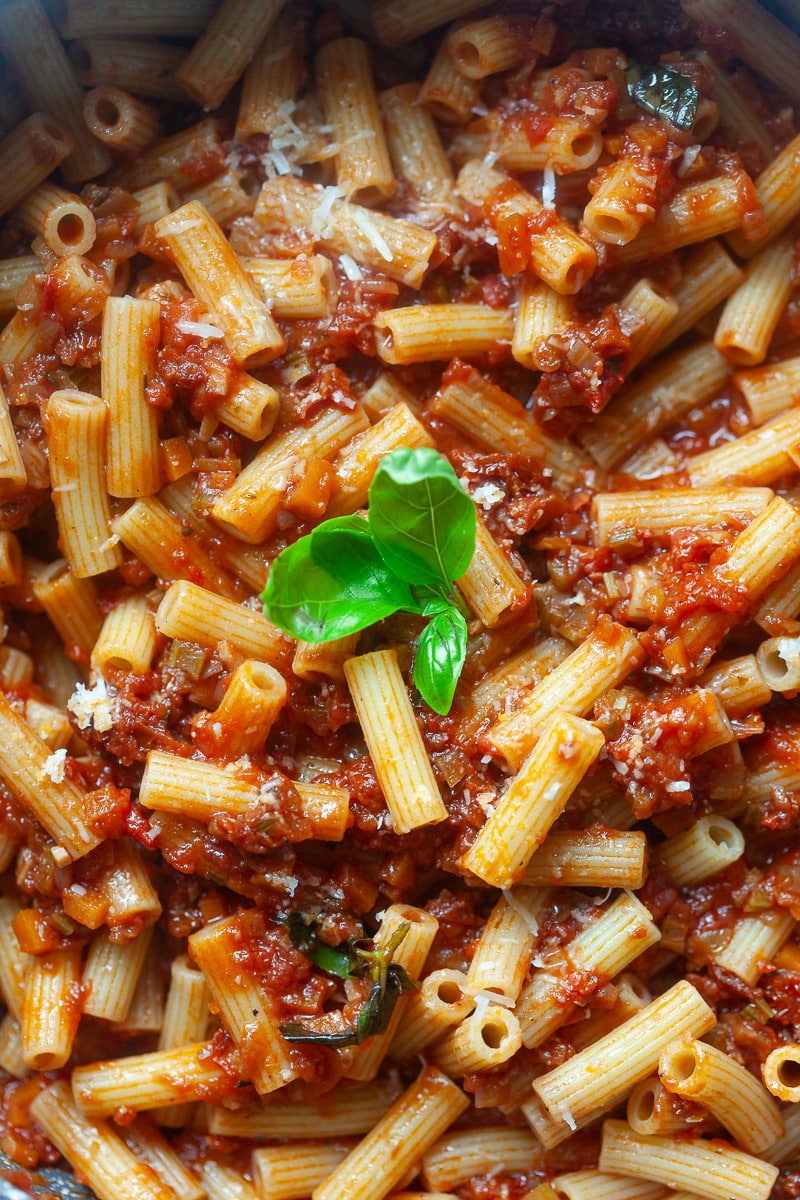
Why it’s special:
- Vegetarian and budget-friendly: Full of flavor without using meat.
- Versatile: Perfect with pasta, polenta, gnocchi, or as a filling for lasagna and stuffed vegetables (check our serving ideas below!)
- Authentic Italian comfort food: Rustic, simple, and satisfying.
Sugo Finto is Tuscany’s answer to a meatless ragù; rich, hearty, and incredibly flavorful despite its humble ingredients.
Let’s dive into the (short) ingredient list and start cooking!
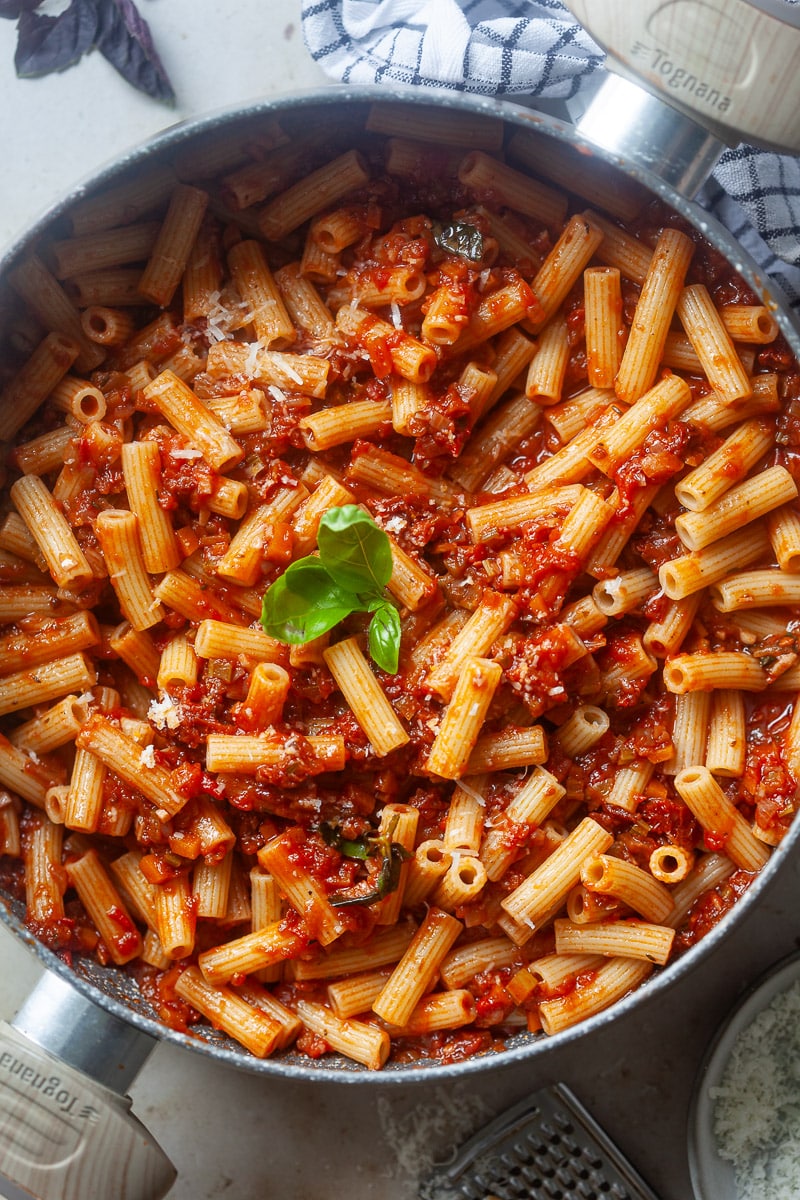
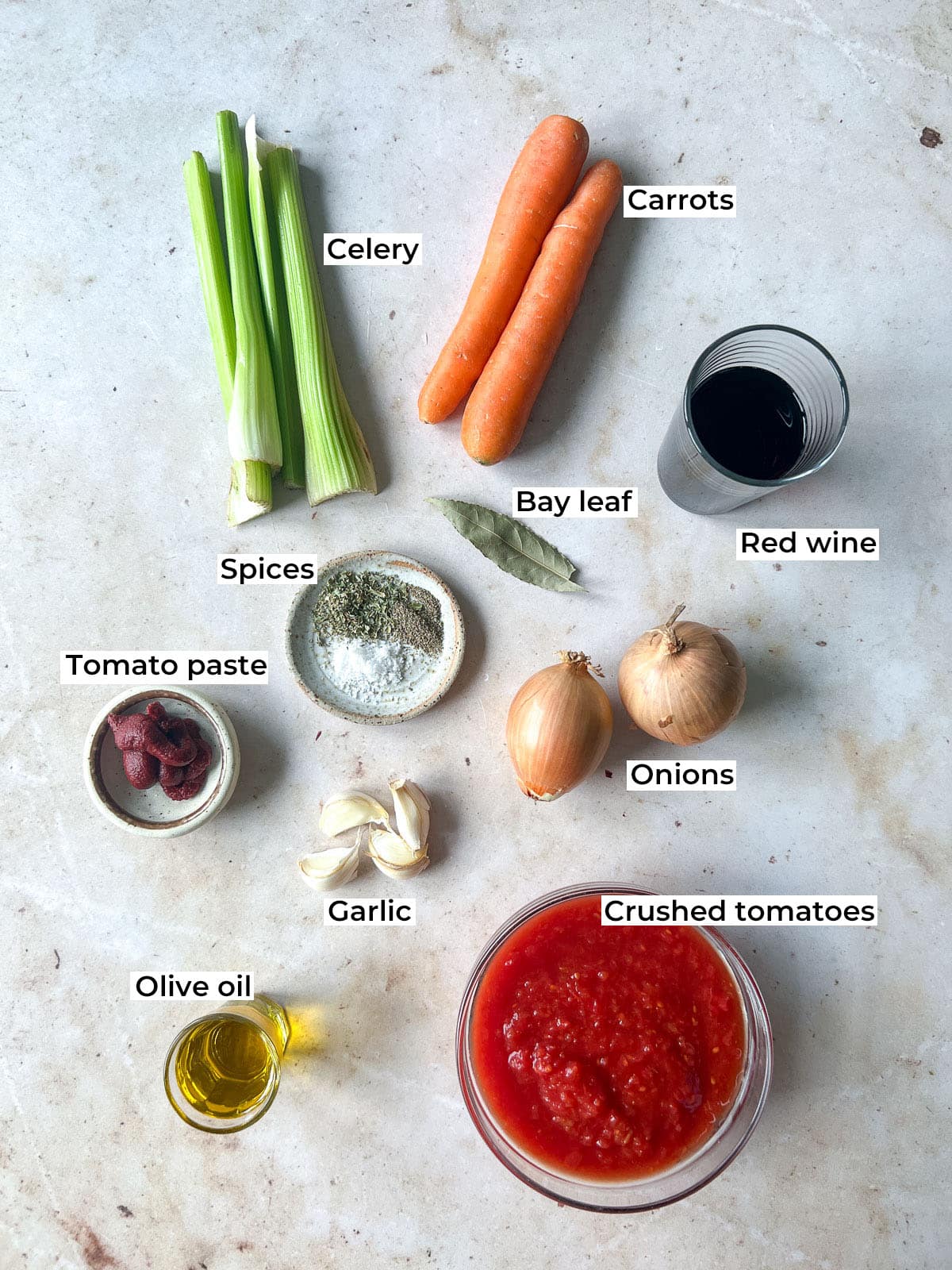
Vegetable Ragù Ingredients
Before we get cooking, let’s take a closer look at the simple, wholesome ingredients that make this Vegetable Ragù so rich and flavorful. Here’s what you’ll need:
Base ingredients – sofritto
- Olive oil: The foundation of the sauce, used to gently fry the vegetables and release their flavors. Extra virgin olive oil adds a deeper, more authentic Italian taste. You can also use sunflower oil or avocado oil, though olive oil is best for flavor.
- Onion: Adds natural sweetness and depth to the sauce. Onions are the backbone of many Italian recipes.
- Carrot: Balances the acidity of the tomatoes with natural sweetness and body.
- Celery stalk: Brings a subtle bitterness and earthiness, completing the classic Italian soffritto trio (onion, carrot, celery).
- Garlic: Infuses the sauce with savory aroma and flavor.
Tomato base
- Tomato paste: Intensifies the tomato flavor and adds richness. Helps thicken the sauce. You can also add some chopped-up sun-dried tomatoes for a deeper, slightly smoky taste.
- Crushed or chopped tomatoes: The main body of the sauce, giving it texture, acidity, and juiciness. Tomato passata also works for a smoother sauce, or fresh peeled tomatoes when in season.
Flavor boosters
- Dry red wine (optional, but traditional): Adds acidity, depth, and a touch of complexity to mimic the richness of a meat ragù. The alcohol cooks off, leaving behind only flavor. You can also swap it with a vegetable broth or a splash of balsamic vinegar for depth without wine.
- Dried oregano or thyme: Brings an herbal note and ties the sauce to classic Italian flavors. Use fresh herbs if you have them (oregano, thyme, or basil) for a brighter taste.
- Bay leaf: Adds a subtle, savory aroma during simmering. Omit if unavailable, though it does add a traditional depth.
- Salt and black pepper to taste: Essential for balancing flavors and enhancing the sauce.
- Sugar: Balances the acidity of the tomatoes and rounds out the sauce.
Liquids
- Water or vegetable broth: Prevents the sauce from becoming too thick while adding body. Broth enhances the depth of flavor.
How to make Vegetable Ragù
This recipe is all about slow cooking simple ingredients to bring out an incredible depth of flavor.
Take your time with the base (soffritto). It’s the secret to that rich, hearty taste that makes this sauce so satisfying. Here’s how to make it step by step:
Cook the soffritto
First, finely chop all your vegetables into small cubes. You want them all at roughly the same size and fairly small, so they cook well and evenly.
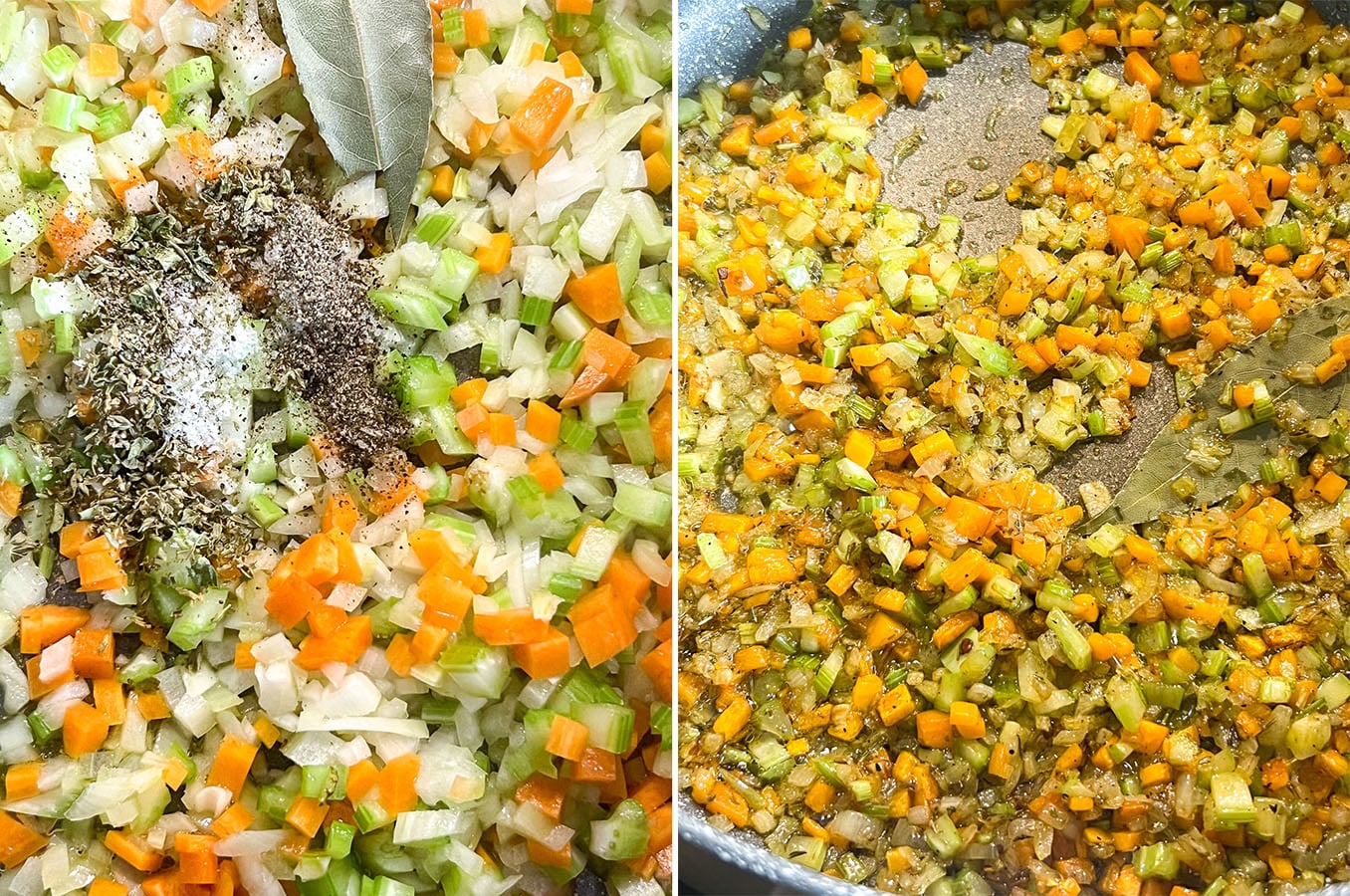
Heat the olive oil in a large, heavy-bottomed pan over medium heat. Add the finely chopped onion, carrot, and celery. This is your classic Italian soffritto. Season with a pinch of salt and pepper, add the oregano or thyme, and drop in the bay leaf.
Cook this mixture slowly for 15–20 minutes, stirring often. Don’t rush! The vegetables should soften, turn golden, and smell wonderfully sweet. This patient step is what gives the sauce its depth.
Add garlic & tomato paste
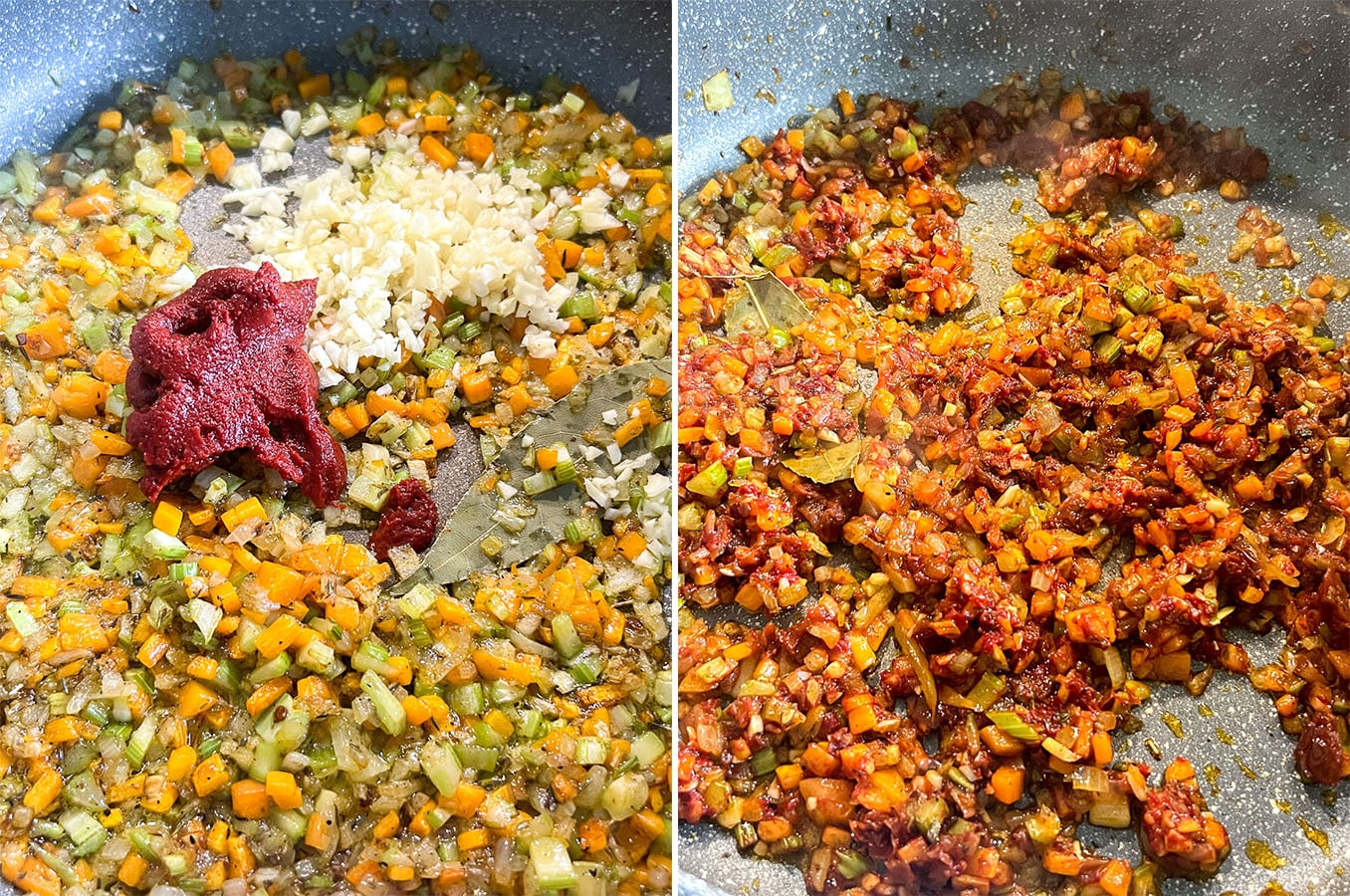
Stir in the minced garlic and cook for just 1 minute until fragrant (be careful not to burn it).
Then, add the tomato paste and cook it for 2–3 minutes. This caramelizes the paste slightly, intensifying the tomato flavor.
Deglaze with wine
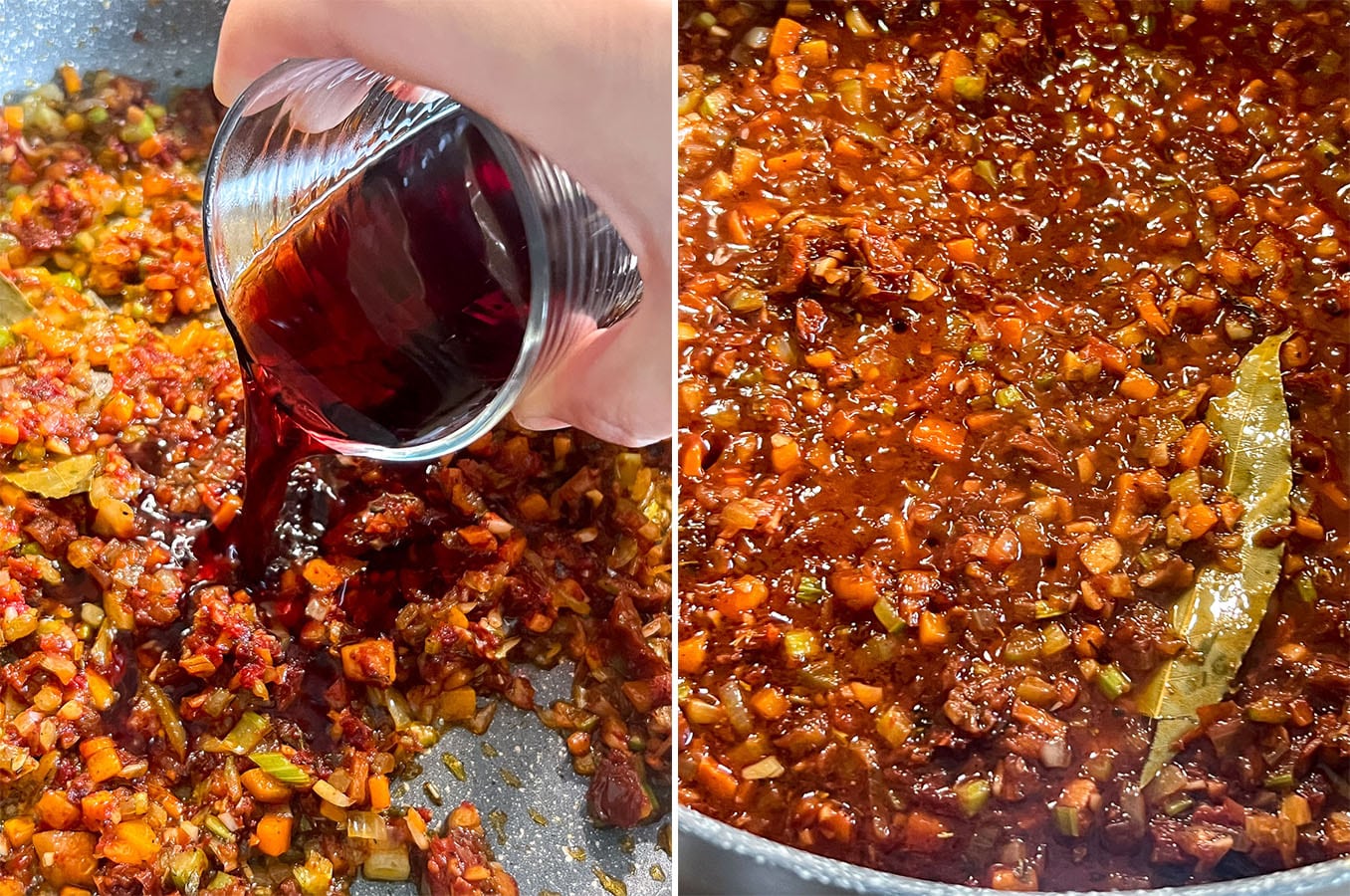
Pour in the red wine and let it simmer for 2–3 minutes until it reduces and the alcohol cooks off. Scrape the bottom of the pan with your spoon to loosen up any flavorful bits. If not using wine, a splash of vegetable broth or balsamic vinegar works well.
Add tomatoes & simmer
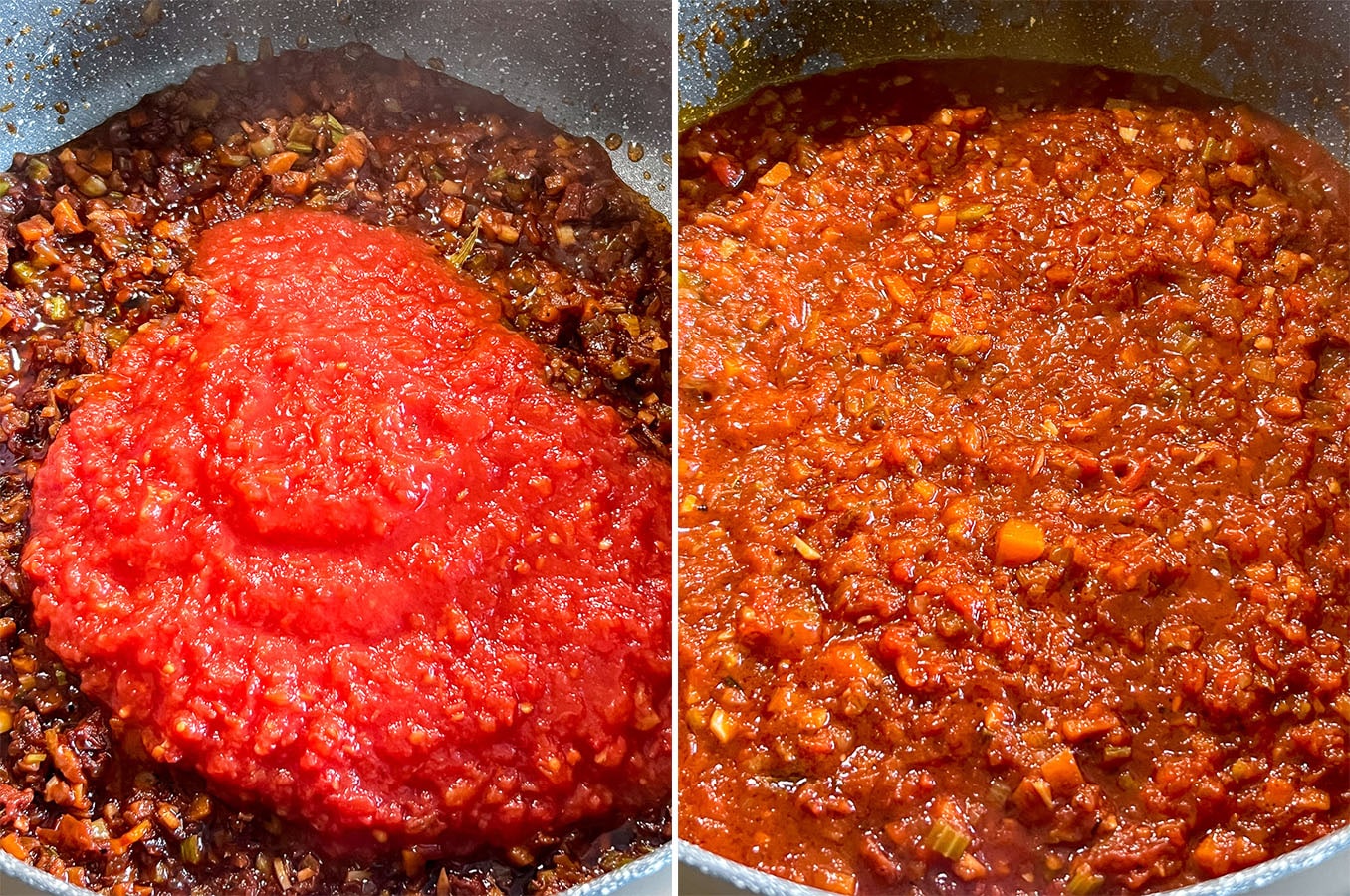
Stir in the crushed tomatoes, season with more salt, pepper, and a pinch of sugar (only if the tomatoes are very acidic). Mix well to combine everything.
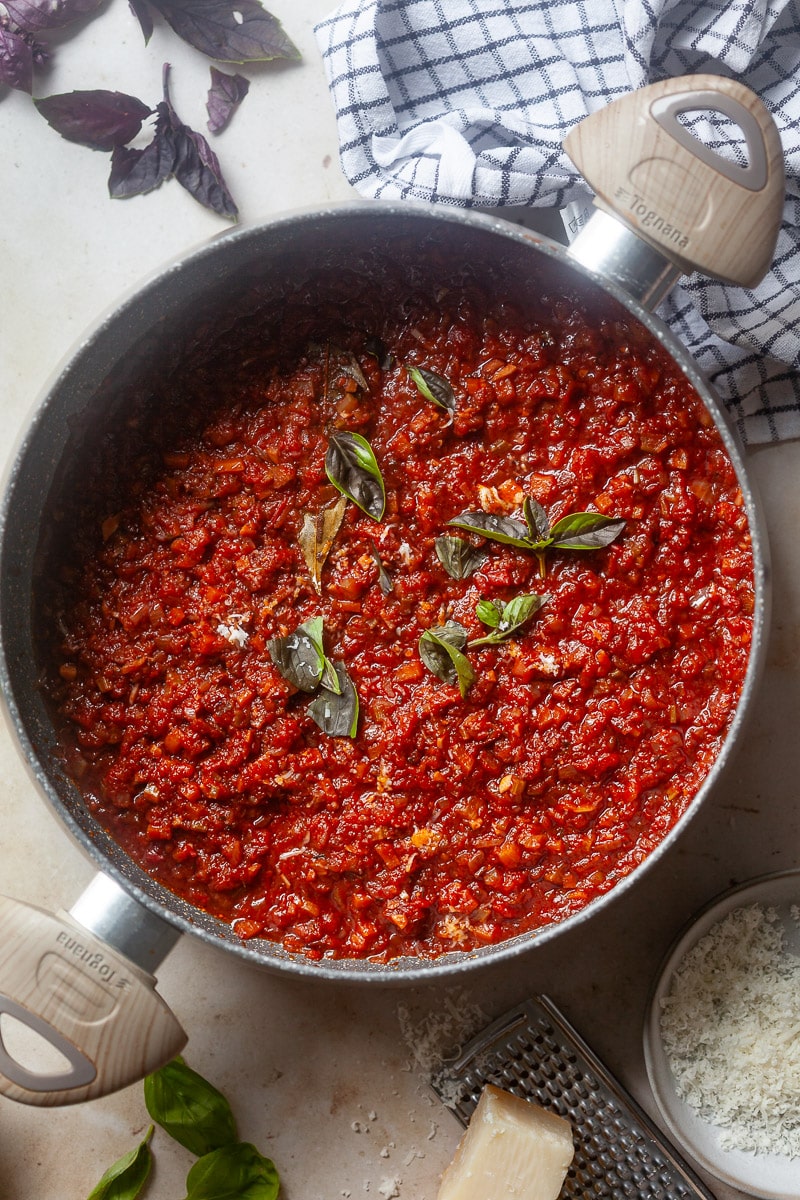
Reduce the heat and let the sauce simmer gently, uncovered, for 30–45 minutes. Stir occasionally.
If the sauce becomes too thick, add a splash of water or vegetable broth. You’re aiming for a thick, rich ragù consistency that coats pasta beautifully.
Cook the pasta
Meanwhile, bring a large pot of salted water to a boil. Cook your pasta until al dente, following package instructions. Before draining, reserve about ½ cup of pasta cooking water. This is liquid gold for helping the sauce cling to the pasta.
Finish the sauce
Remove the bay leaf from the ragù. Taste and adjust the seasoning with extra salt and pepper if needed.
Combine & serve
Add the cooked pasta directly into the sauce and toss to coat. If the sauce feels too thick, loosen it with a splash of the reserved pasta water until silky.
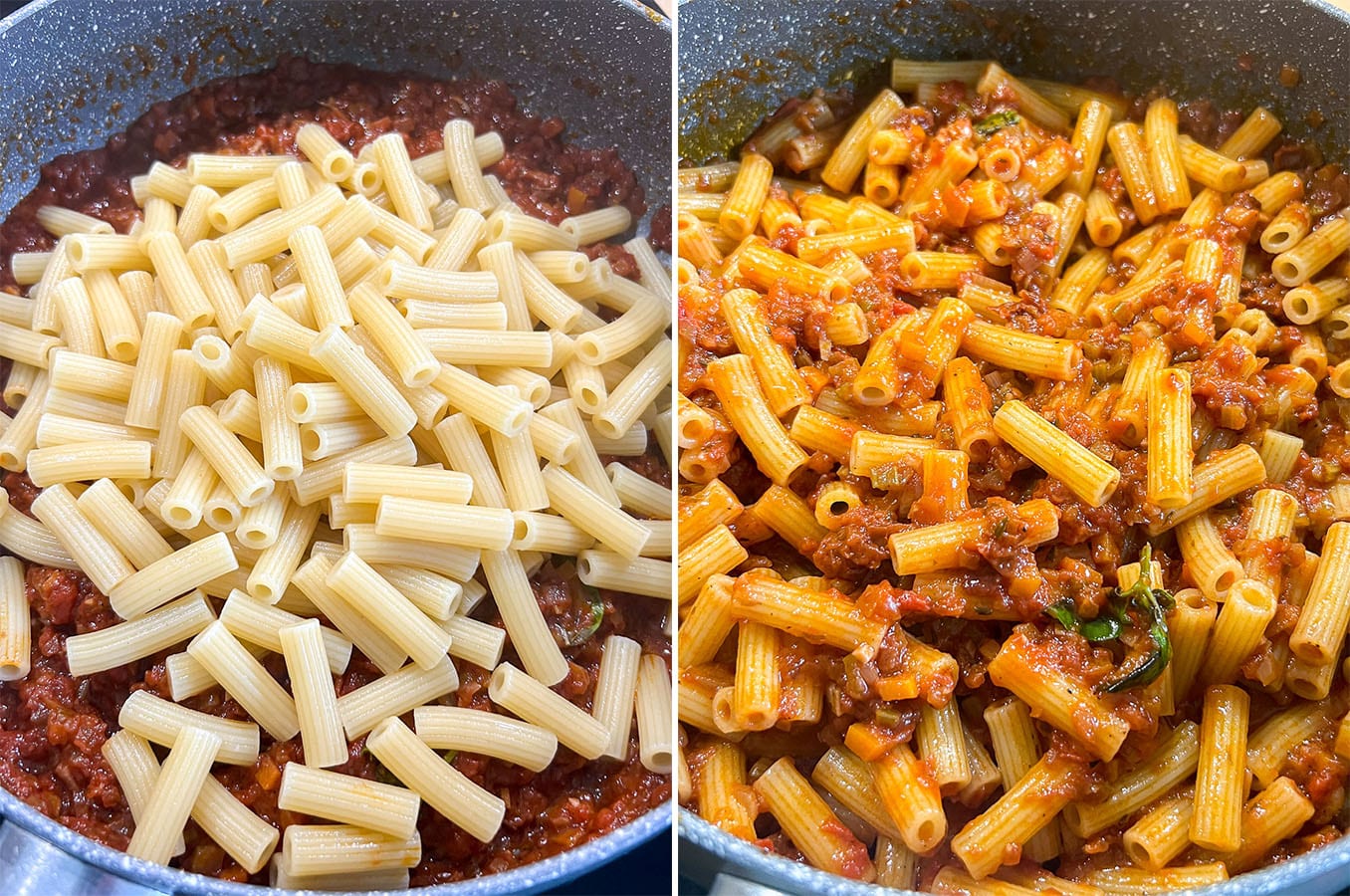
Serve hot, topped with fresh basil or parsley, and finish with a drizzle of good olive oil. Sprinkle some grated Parmesan or a vegan cheese alternative on top.
This sauce tastes even better the next day, so make a double batch and enjoy leftovers with pasta, polenta, or crusty bread. See below our serving ideas on more exciting ways to serve this simple sugo.
How to Serve Vegetable Ragù
This hearty vegetable ragù is as versatile as it is flavorful. Here are some of the best ways to enjoy it:
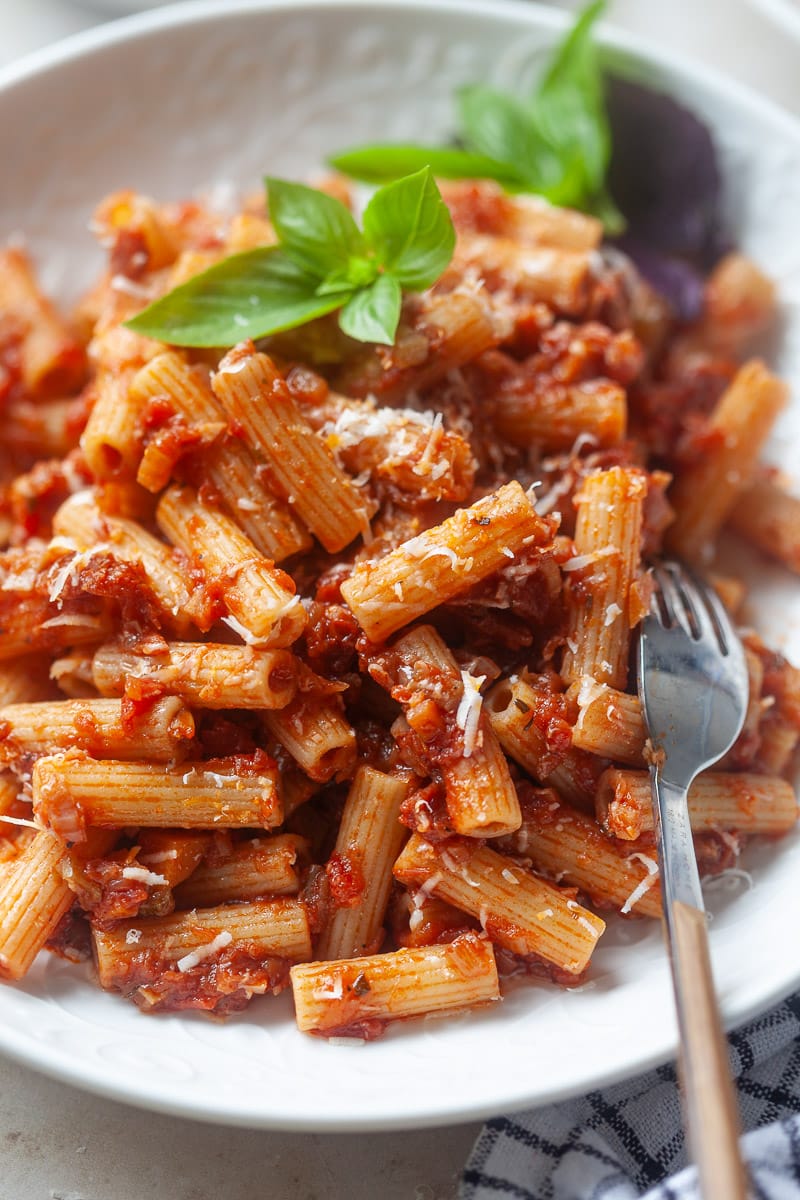
- Toss with pasta like spaghetti, rigatoni, penne, or wide ribbons like tagliatelle for a comforting classic.
- Spoon the ragù over creamy polenta for a rustic Italian dinner.
- Soft, pillowy gnocchi are perfect for soaking up the sauce.
- Serve with focaccia or crusty ciabatta for dipping, or spread on toasted bruschetta as a starter.
Have leftovers?
Don’t let any of this delicious sauce go to waste; ragù leftovers are incredibly versatile! Here are some ideas to use up the sauce beyond pasta and gnocchi:
- Layer it with roasted eggplant, zucchini, or squash for a simple veggie bake.
- Make a vegetarian lasagna: Layer ragù with pasta sheets, béchamel, and cheese for a baked favorite.
- Fill bell peppers, zucchini, or eggplant with ragù, top with breadcrumbs, and bake.
- Warm ragù in a skillet, make little wells, and crack in eggs (or add tofu scramble). Simmer until set.
- Stir into broth with beans or pasta to create a quick, hearty soup.
For easy meal prep, freeze leftover ragù in small portions. That way, you can defrost just what you need for each recipe.
You can thaw just what you need and turn it into a completely new meal in minutes.
How to Store Leftover Vegetable Ragù
This sauce keeps beautifully, making it perfect for meal prep or batch cooking. Here’s how to store it for the best flavor and freshness:
- In the fridge:
Transfer cooled ragù to an airtight container and store for up to 4–5 days. Reheat gently on the stove, adding a splash of water or vegetable broth to loosen it if needed. - In the freezer:
Portion into freezer-safe containers or bags and freeze for up to 3 months. Thaw overnight in the fridge before reheating. - Reheating tip:
Always reheat over low-medium heat and stir occasionally to prevent sticking. A drizzle of fresh olive oil or a sprinkle of herbs can revive the flavors.
Leftover ragù isn’t just for pasta! Try it as a topping for baked potatoes, polenta, or even on crusty bread as a rustic bruschetta.
Similar recipes
Vegan Bolognese Sauce and Gnocchi
Easy Pasta in Fresh Tomato Sauce
Pasta alla Norma (Sicilian Eggplant Pasta)

Vegetable Ragù (Sugo Finto)
This Vegetable Ragù (Sugo Finto) is a Tuscan-style tomato sauce made with simple vegetables, herbs, and olive oil. Quick, budget-friendly, and full of flavor, it’s the perfect vegetarian pasta sauce for any night of the week.
Ingredients
- 3 tbsp olive oil
- 1 medium onion, finely chopped
- 1 medium carrots, finely chopped
- 1 celery stalk, finely chopped
- 4 garlic cloves, minced
- 2 tbsp tomato paste
- 400 gram (1 can) crushed or finely chopped tomatoes
- 100 ml dry red wine (optional, but traditional)
- 1 tsp dried oregano or thyme
- 1 bay leaf
- Salt and black pepper to taste
- 1/2 tsp sugar
- Water or vegetable broth, as needed
Instructions
- Heat olive oil in a large pan over medium heat. Add the finely chopped onion, carrot, and celery (this mix is your soffritto). Season with a pinch of salt and pepper, and add oregano or thyme, and a bay leaf.
- Cook slowly, stirring often, for about 15–20 minutes, until soft, golden, and sweet-smelling. Don’t rush; this builds the flavor base of the sauce.
- Add minced garlic and stir for 1 minute until fragrant. Stir in the tomato paste and cook for another 2–3 minutes to deepen its flavor.
- Pour in the red wine and let it simmer for 2–3 minutes until slightly reduced and the alcohol has cooked off.
- Add the crushed tomatoes, season with salt, pepper, and a pinch of sugar if needed. Stir well to combine.
- Lower the heat and simmer the sauce uncovered for 30–45 minutes, stirring occasionally. If it gets too thick, add a splash of water or veggie broth. You want a thick, rich ragu consistency.
- Meanwhile, bring a large pot of salted water to a boil. Cook your pasta according to package instructions until al dente. Reserve a bit of pasta water before draining.
- Remove the bay leaf from the sauce. Taste and adjust seasoning.
- To serve, cook some pasta or gnocchi, then add the cooked pasta to the sauce, tossing to coat. Add a splash of pasta water if needed to help everything come together smoothly.
- Serve hot, topped with fresh parsley or basil and a sprinkle of vegan cheese if you like. A drizzle of good olive oil is also lovely.
Notes
- Add a chopped dried porcini mushroom, some chopped up sun-dried tomatoes, or a splash of soy sauce for even more umami.
- This sauce freezes well — make extra for easy weeknight dinners.
- Wide noodles like pappardelle or ridged shapes like rigatoni help catch the hearty sauce.
Nutrition Information:
Yield: 4 Serving Size: 1Amount Per Serving: Calories: 151Total Fat: 10gSaturated Fat: 1gTrans Fat: 0gUnsaturated Fat: 9gCholesterol: 0mgSodium: 338mgCarbohydrates: 10gFiber: 2gSugar: 4gProtein: 2g
Nutrition data is automatically calculated using Nutritionix and may not be accurate.