


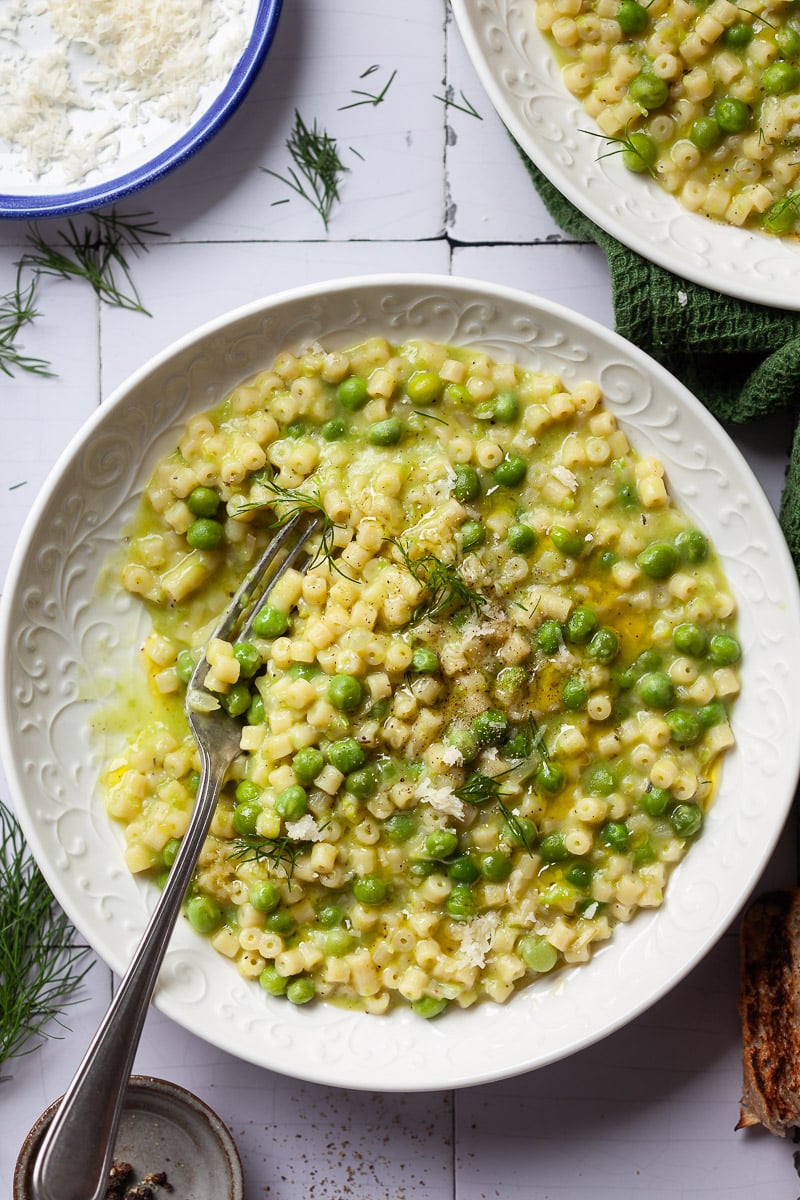
This One-Pot Pasta with Peas (Pasta e Piselli) is an Italian pasta with peas recipe made with only 5 simple ingredients in under 30 minutes. Quick & easy.
This is one of those recipes I end up making when I don’t really feel like cooking, but still want something warm and comforting in a bowl.
This One-Pot Pasta with Peas (Pasta e Piselli) is simple in the best possible way – just pasta, peas, onion, olive oil, and a little cheese, but somehow it tastes like so much more than the sum of its parts.
It’s the kind of meal that quietly comes together in one pot while you’re doing other things in the kitchen. The onions get soft and sweet, the peas turn buttery, and the pasta cooks right in everything, soaking up all that flavor. And then suddenly it turns creamy without you even trying too hard. No cream, no fuss, just that cozy, starchy magic from the pasta itself.
I also love how budget-friendly this is. It’s made from the kind of ingredients you can always keep around, like frozen peas in the freezer, pasta in the pantry, and a bit of cheese in the fridge. Nothing fancy, nothing complicated, but it still feels like real food.
And honestly, it’s sneaky-good for you too. Peas bring fiber, protein, and a nice little sweetness, while olive oil keeps things rich and satisfying in that simple Mediterranean way.
It’s filling without feeling heavy, which is kind of the dream for an everyday dinner.
If you’ve never tried pasta cooked this way before, it’s worth it just for the texture alone. It lands somewhere between a soup and a pasta dish. It’s creamy, spoonable, and comforting in a way that feels a bit nostalgic, even if you didn’t grow up eating it.
This is the perfect recipe for busy weeknights, end-of-the-month meals, or whenever you need a hearty dinner without a trip to the grocery store. Everything cooks in one pot, which means less cleanup and more time to enjoy your meal.
It’s not trying to be fancy. It’s just really good, really easy, and the kind of thing you end up making again the next time you’re staring into your pantry, wondering what on earth to cook.
Pasta with Peas Ingredients
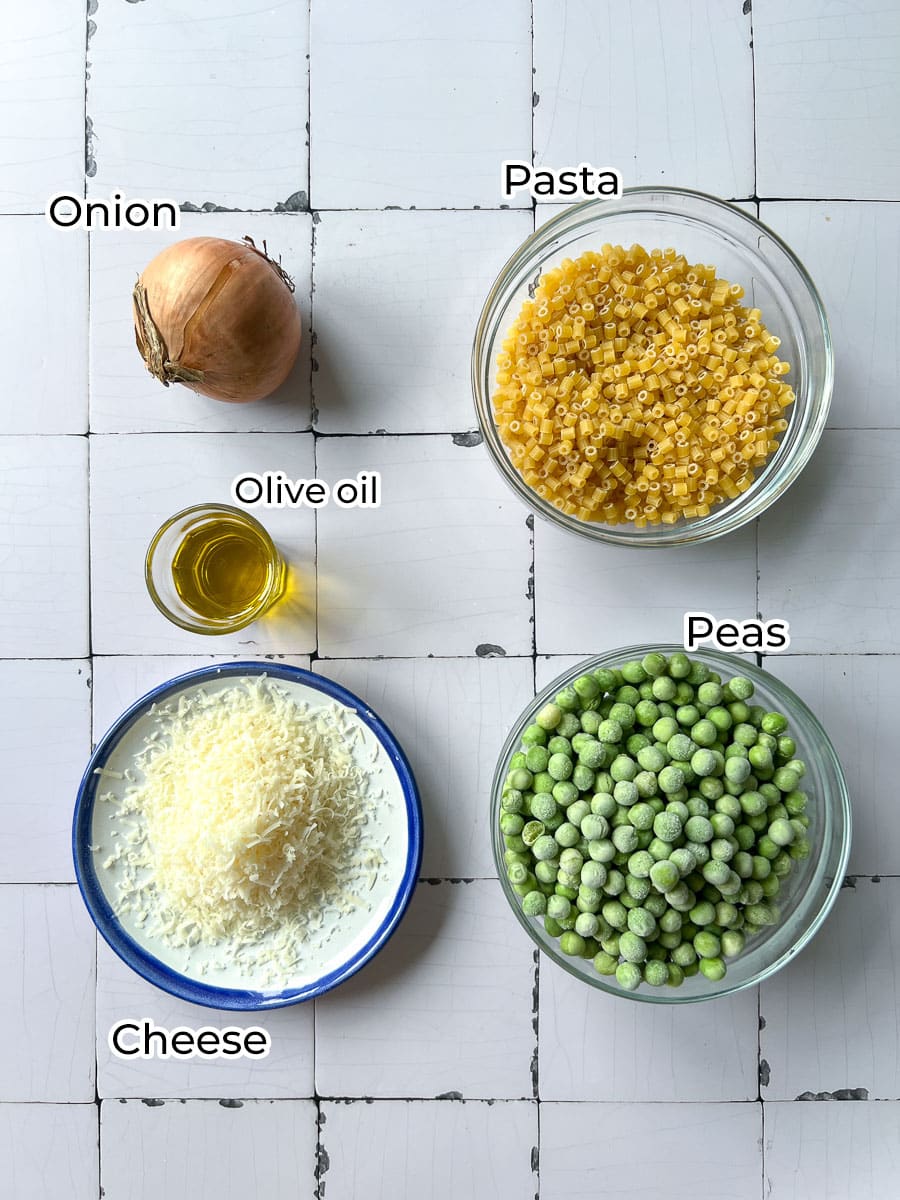
With just a handful of pantry staples, this classic One-Pot Pasta with Peas (Pasta e Piselli) recipe turns into a comforting, creamy, and satisfying Italian meal.
For the best flavor, use a good-quality olive oil and freshly grated cheese. To keep this dish vegan, use vegan parmesan and vegan butter.
- Olive oil. Use extra-virgin olive oil for the richest flavor and authentic Italian taste.
- Yellow onion. Slowly sautéed onion forms the savory foundation of the dish.
- Peas. Use fresh or frozen. Frozen peas work beautifully year-round and retain their sweetness. Fresh peas are an excellent seasonal substitute when available.
- Water or vegetable broth. Vegetable broth adds extra flavor, while water keeps the dish simple and traditional. Both work just fine.
- Small pasta. Ditalini, small shells, tubetti, or elbow pasta are ideal because they cook evenly and mingle perfectly with the peas.
- Cheese or vegan cheese. Parmesan lends a mild, nutty flavor, while Pecorino Romano adds a sharper, saltier finish. Use a vegan Parmesan alternative to keep the recipe vegan.
- Salt and black pepper
- (Vegan) Butter. Stirred in at the end, it creates an even silkier, creamier texture without overpowering the dish. A small drizzle of olive oil also works!
How to make Pasta with Peas
For traditional Pasta with Peas, the goal is a texture that’s neither dry pasta nor soup, but something delicious in between.
Cooking the pasta directly in the broth allows it to release starches that naturally thicken the liquid, while blending some of the peas creates a velvety, creamy sauce without the need for heavy cream. Follow these steps for the best results.
Sauté the onion until soft and sweet
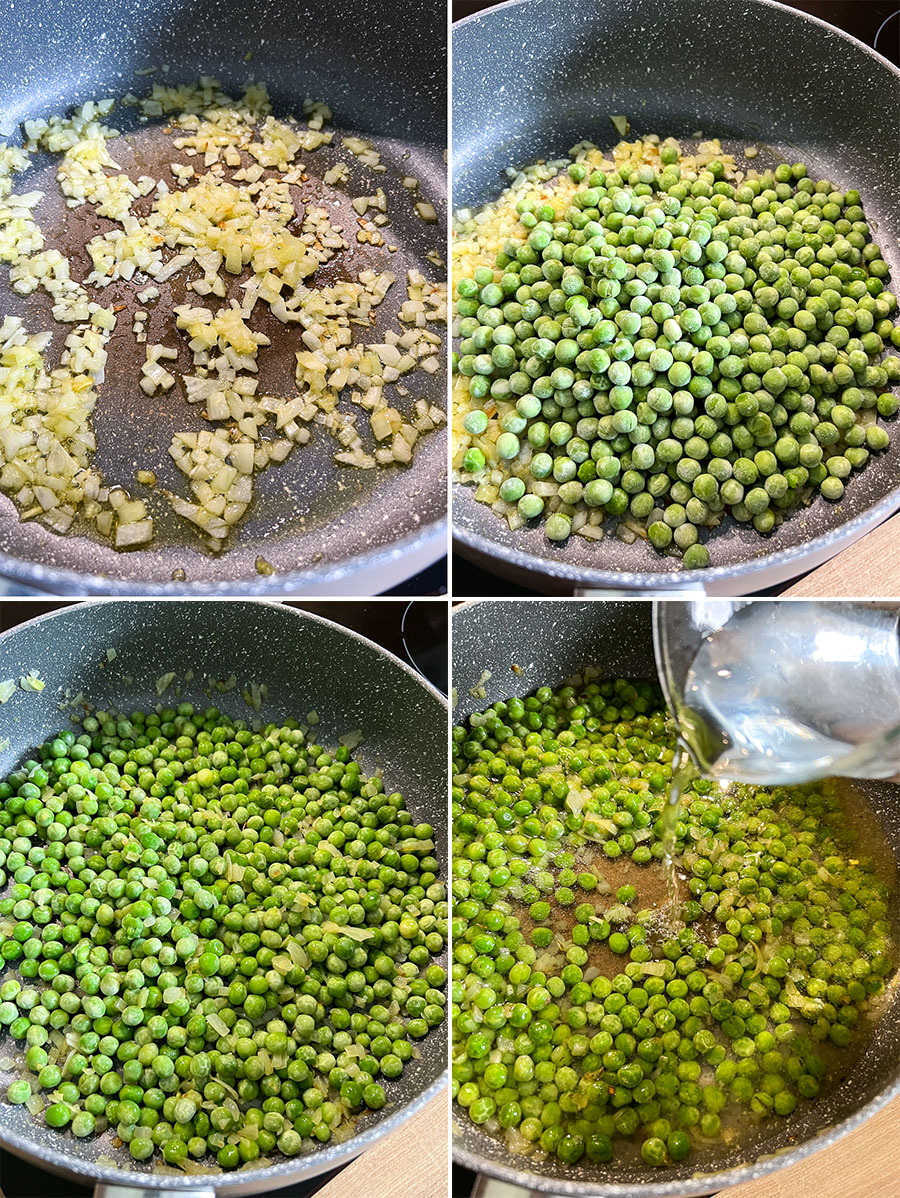
Heat the olive oil in a large deep skillet, sauté pan, or Dutch oven over medium heat. Add the finely diced onion and cook gently for 6–8 minutes, stirring occasionally, until soft, translucent, and lightly golden around the edges. Avoid rushing this step or browning the onion too much. Slow cooking develops natural sweetness that forms the dish’s flavor base.
If the onions start to color too quickly, lower the heat and add a splash of water to help them soften without burning.
Cook the peas
Add the peas to the pan and stir for 2–3 minutes, allowing them to absorb the flavors of the onion and olive oil. This brief cooking step enhances their sweetness and helps build a richer overall flavor. No need to thaw frozen peas beforehand; they can go straight into the pan.
Add the liquid and season
Pour in the water or vegetable broth and bring the mixture to a gentle simmer. Season lightly with salt and freshly cracked black pepper. Allow the peas to simmer for about 5 minutes until tender and bright green.
Create a creamy pea sauce
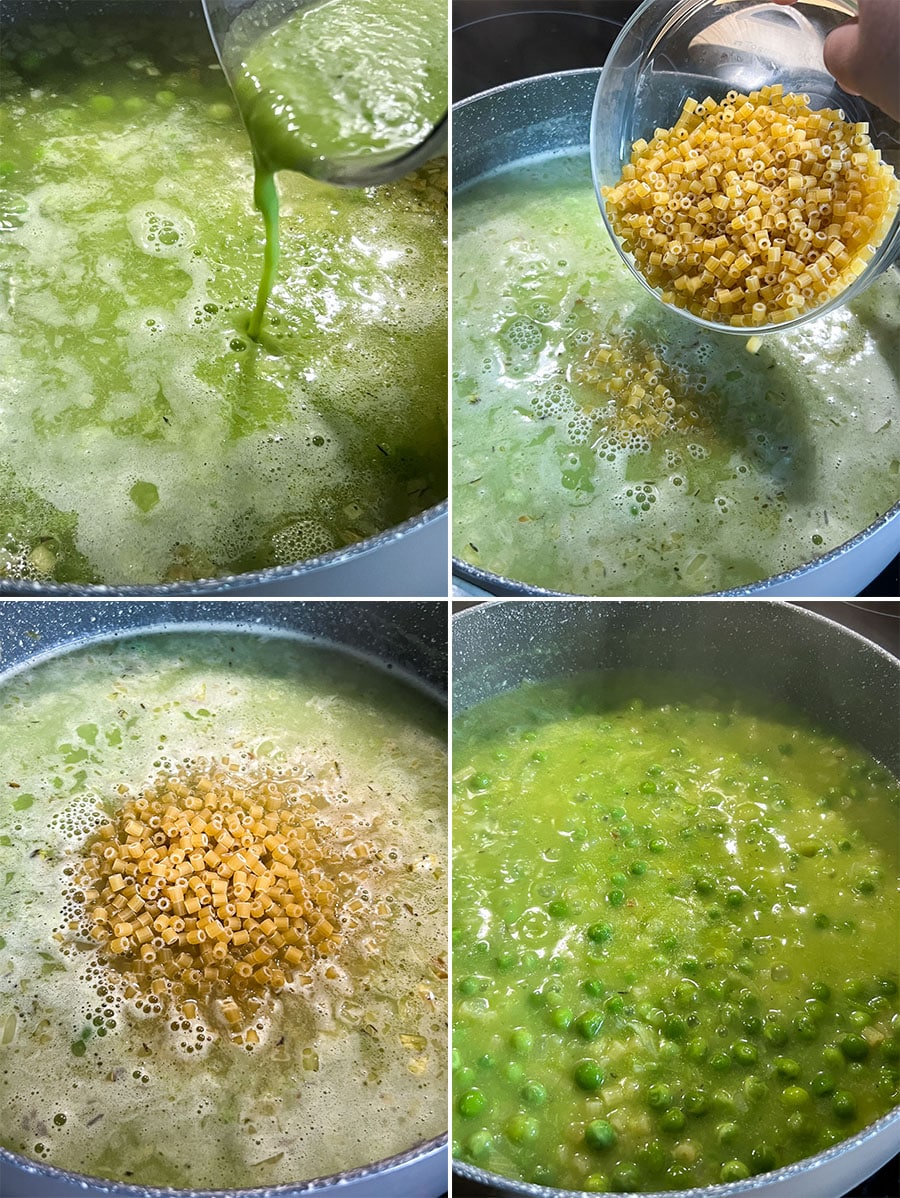
Carefully remove about one-third of the peas and some of the cooking liquid. Blend until completely smooth using a blender or immersion blender. Return the purée to the pot and stir well.
This step gives the dish its signature creamy texture while still leaving plenty of whole peas for contrast.
Cook the pasta directly in the broth
Add the dry pasta to the pot and stir well to prevent sticking. Maintain a gentle simmer and cook for 10–12 minutes, or according to the package instructions, stirring frequently.
As the pasta cooks, it will release starch into the broth, naturally thickening the dish and creating a silky texture.
Stir every few minutes, especially toward the end of cooking, as small pasta shapes tend to settle and stick to the bottom of the pot.
Check the texture
If the mixture becomes too thick, add a splash of hot water or additional broth. The finished dish should be loose, creamy, and spoonable; somewhere between a pasta dish and a hearty soup.
Keep in mind that this dish continues to thicken as it sits, so it’s better to leave it slightly looser than you think necessary.
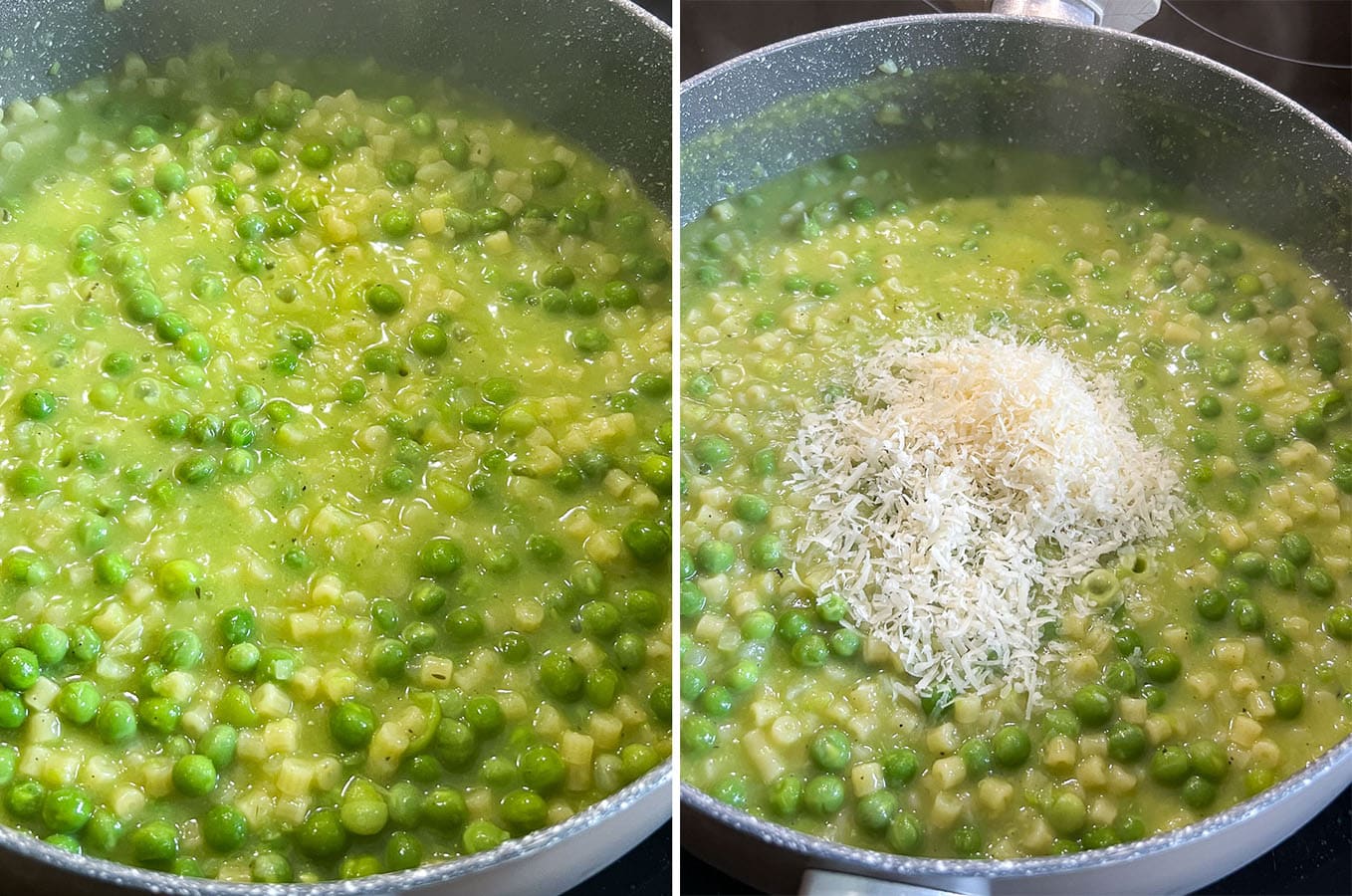
Finish with cheese and butter
Remove the pot from the heat. Stir in the grated cheese (Parmesan, Pecorino Romano, or vegan cheese) along with the optional knob of butter (can use vegan).
Mix vigorously until the cheese melts completely and the broth becomes glossy and creamy.
Taste and adjust the seasoning with additional salt and black pepper if needed.
Serve immediately
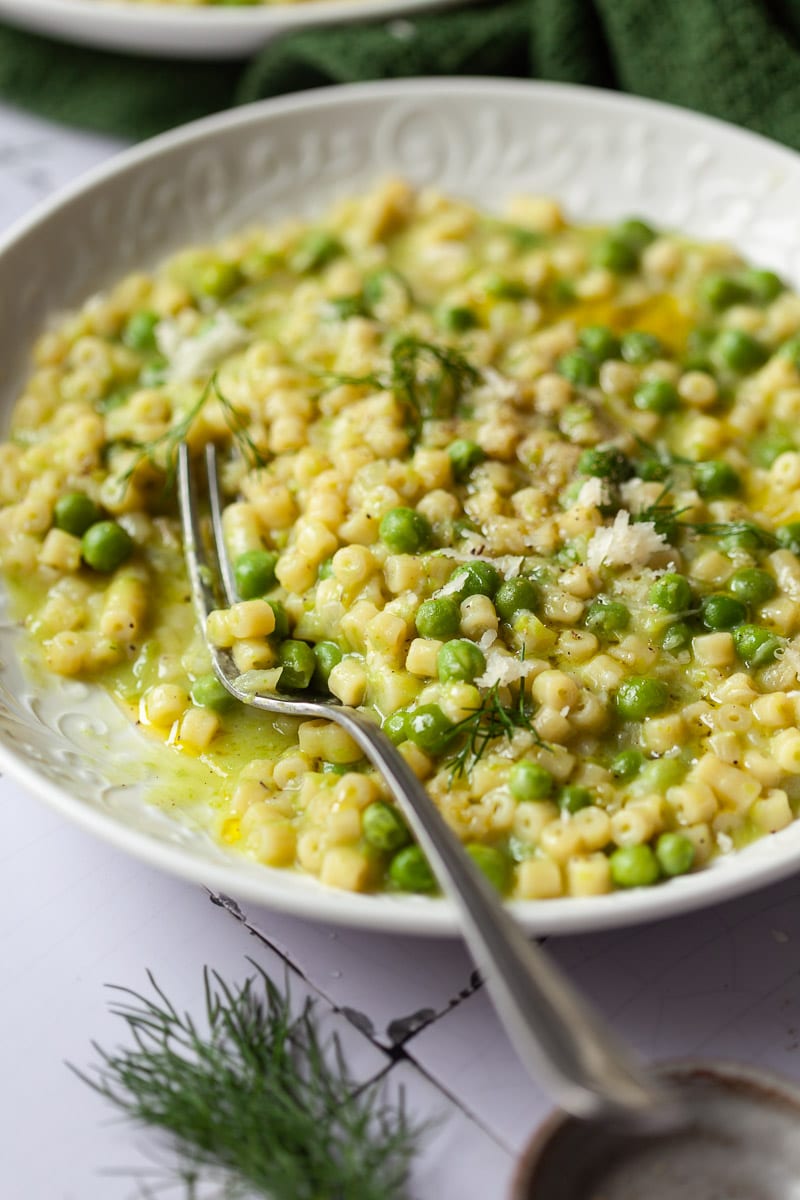
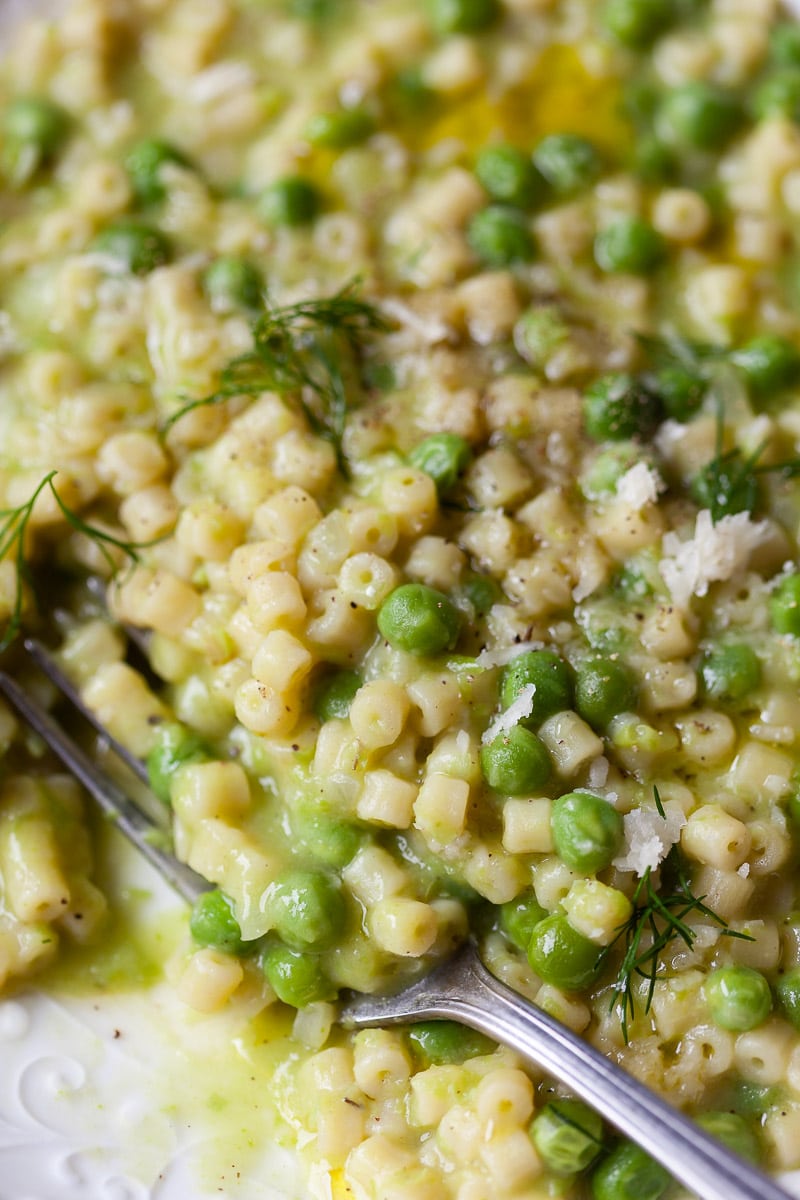
Ladle the pasta into warm bowls. Top with more grated cheese, freshly cracked black pepper, chopped parsley, and a drizzle of good-quality olive oil.
Serve immediately while hot and creamy for the best texture and flavor.
Authentic Pasta e Piselli is often even looser than many modern recipes suggest. If you’re deciding between “slightly thick” and “slightly soupy,” the traditional choice is usually the latter.
Tips for the best Pasta with Peas:
- Use small pasta: Small shapes help create the classic creamy texture and make every bite balanced.
- Don’t overcook the peas: They should stay bright and sweet, not dull and mushy.
- Keep it slightly brothy: Traditional Pasta e Piselli is softer and creamier than standard pasta dishes.
- Stir often: The starch released from the pasta helps naturally create the sauce.
- Good cheese matters: Freshly grated Parmesan or Pecorino makes a huge difference, but vegan Parmesan will work just as well!
Serving ideas
This comforting Pasta e Piselli is wonderfully versatile and can be served as a light main course or alongside other Italian-inspired dishes.
While it’s best enjoyed fresh (served hot and immediately), leftovers can be easily stored and reheated with a few simple adjustments to restore their creamy texture.
Here are a few delicious ways to serve it:
- Serve alongside warm Italian bread, focaccia, or a rustic sourdough loaf to soak up the creamy broth.
- A simple green salad with lemon vinaigrette helps balance the richness of the pasta and cheese.
- Roasted asparagus, sautéed spinach, or grilled zucchini make excellent side dishes.
- Finish with chopped parsley, basil, or mint for a burst of freshness.
- In Italy, Pasta e Piselli is often enjoyed as a comforting first course before a larger meal.
- A small drizzle of high-quality extra-virgin olive oil just before serving adds richness and enhances the flavor of the peas.
Storage tips
Because the pasta continues to absorb liquid as it sits, this Pasta with Peas will naturally thicken during storage. Fortunately, it’s easy to bring it back to its original consistency when reheating.
- Refrigerate: Store leftovers in an airtight container in the refrigerator for up to 3 days.
- Reheat gently: Warm on the stovetop over low heat or in the microwave, adding a splash of water or vegetable broth to loosen the sauce as needed. Stir well while reheating until the pasta becomes creamy and silky again.
- Freeze with caution: While technically freezable for up to 2 months, the pasta may become softer after thawing. For best results, enjoy freshly made or refrigerated leftovers.
- Meal prep tip: If preparing ahead, slightly undercook the pasta and reserve extra broth. Add the broth when reheating to maintain the ideal consistency.
For the best flavor and texture, Pasta e Piselli is at its peak when served immediately after cooking, while still warm, creamy, and spoonable.
Similar recipes:
Vegan Chickpea Pasta (Pasta e ceci)
One-Pot Pasta with Peas (Pasta e Piselli)
Simple, creamy, and full of comfort, this Pasta with Peas is one of those classic Italian dishes that proves the best meals often come from the simplest ingredients. Sweet peas, small pasta, olive oil, onion, and a little cheese come together into a silky, cozy bowl that feels like home.
Ingredients
- 3 tbsp olive oil
- 1 small yellow onion, finely diced
- 320 g frozen peas (or fresh peas when in season)
- 4 cups water or vegetable broth (divided)
- 200 g small pasta (ditalini, small shells, tubetti, or elbow pasta)
- 3 tbsp grated Parmesan or Pecorino Romano (use vegan parmesan for a vegan version)
- Salt and freshly cracked black pepper
- Optional: a small knob of vegan butter for extra richness
Instructions
- Heat olive oil in a large deep skillet, sauté pan, or pot over medium heat. Add the finely diced onion and cook gently for about 6–8 minutes until soft, sweet, and translucent.
- Add the peas and stir for 2–3 minutes so they absorb the flavor of the onion and oil.
- Pour in the water and bring everything to a gentle simmer.
- Season lightly with salt and black pepper.
- Let simmer for about 5 minutes.
- Remove about 1/3 of the peas and water, and blend them until smooth. Return to the pot.
- Add the dry pasta directly into the pot. Stir well and simmer gently, stirring often, for about 10–12 minutes (depending on pasta shape), until the pasta is tender and the broth becomes creamy and slightly thickened.
- Add a little extra hot water or broth if needed - the final texture should be loose, silky, and spoonable, not dry. This dish should sit somewhere between pasta and soup.
- Turn off the heat. Stir in the grated Parmesan and optional butter. Mix vigorously until everything becomes glossy and creamy. Taste and adjust seasoning.
- Spoon into bowls. Top with extra Parmesan, fresh parsley, black pepper, and a drizzle of olive oil. Serve immediately while hot and creamy.
Nutrition Information:
Yield: 3 Serving Size: 1Amount Per Serving: Calories: 401Total Fat: 19gSaturated Fat: 5gUnsaturated Fat: 15gCholesterol: 14mgSodium: 1295mgCarbohydrates: 43gFiber: 6gSugar: 9gProtein: 15g
Nutrition data is automatically calculated using Nutritionix and may not be accurate.