


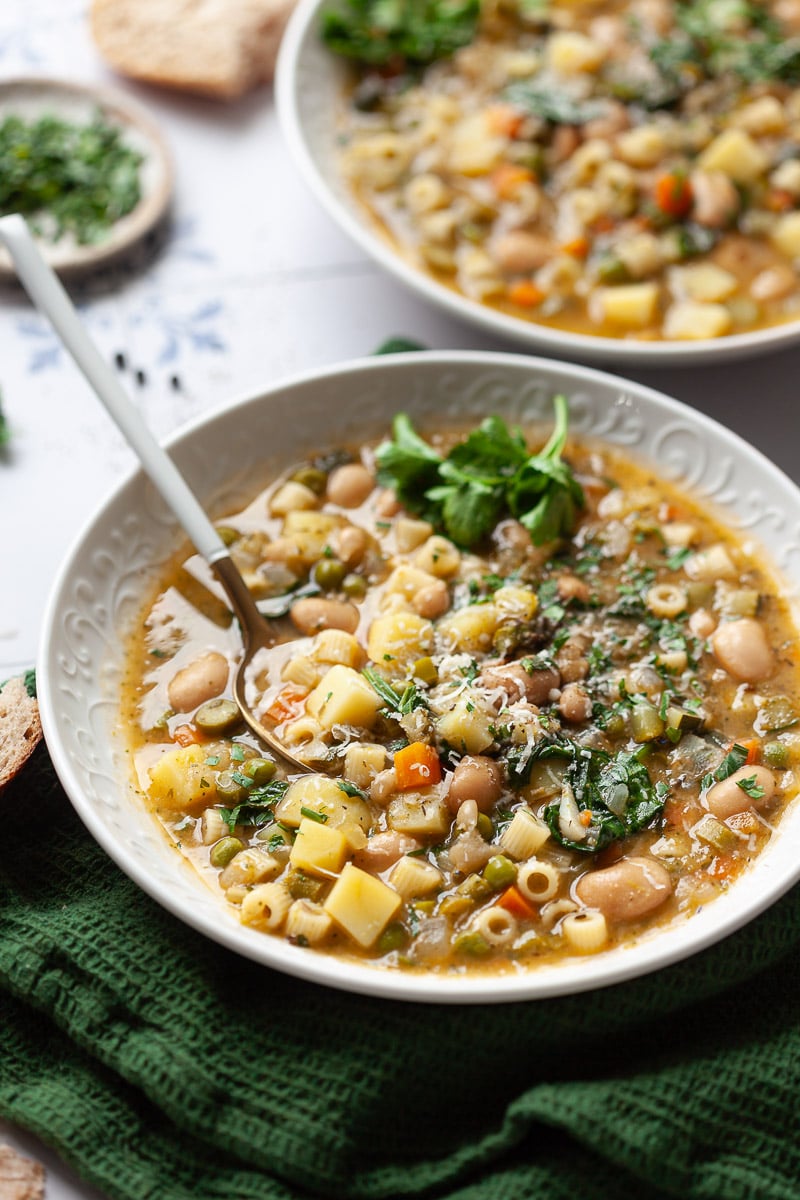
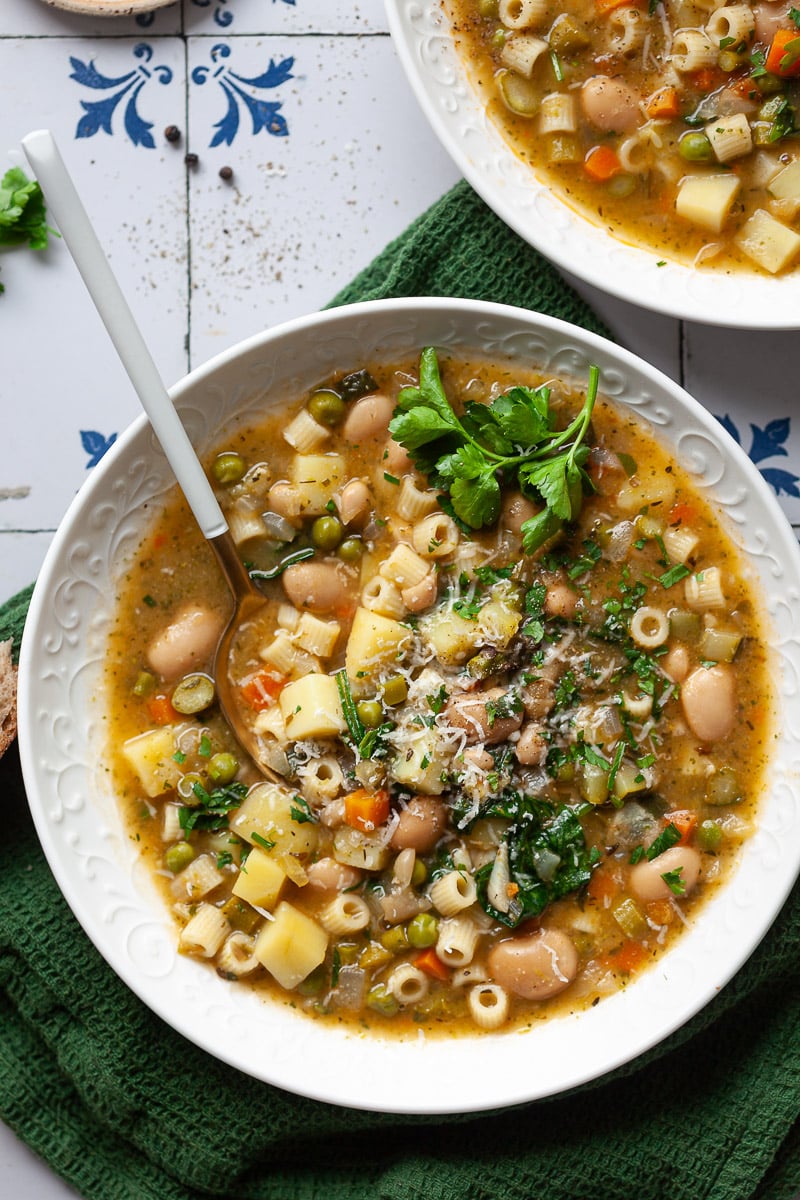
This Spring Vegetable Minestrone Soup is packed with tender vegetables, beans, pasta, and fresh herbs. A cozy recipe everyone will love.
Minestrone has been loved for generations because it’s one of those wonderfully flexible recipes that make the most of simple, everyday ingredients.
While classic minestrone is often associated with cozy winter meals, this Spring Vegetable Minestrone Soup feels lighter, brighter, and full of fresh seasonal flavor.
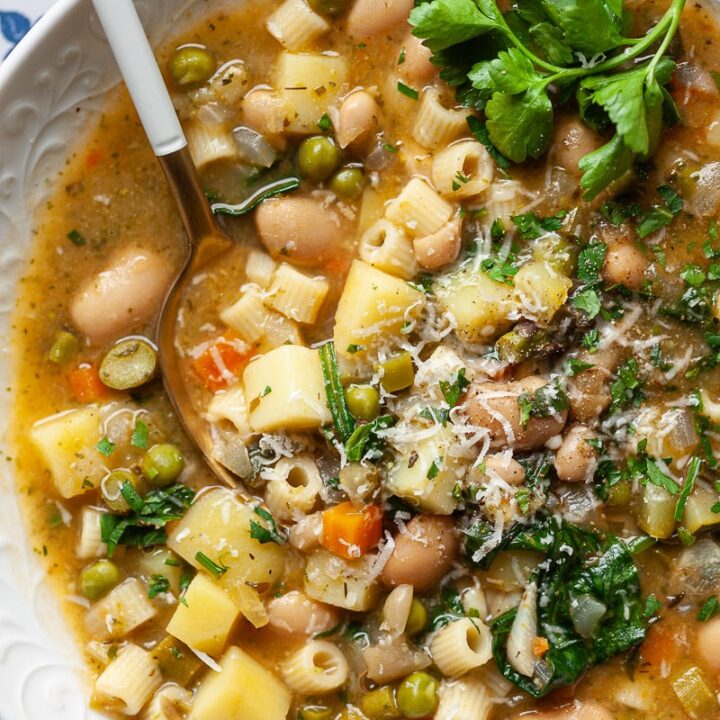
It’s packed with tender vegetables, creamy white beans, small pasta, and leafy greens, all simmered in a flavorful broth with fresh herbs and a squeeze of lemon to bring everything to life.
Honestly, this is the kind of soup I make when I’m not sure what else to cook. If I have a few vegetables in the fridge, a can of beans, and some pasta in the pantry, minestrone usually happens.
Originally an Italian “use what you have” kind of soup, it became popular because it’s affordable, nourishing, and easy to adapt to the seasons.
No two pots are exactly the same, and there is no single “right” way to make it. And that’s part of the charm.
In spring, it becomes all about asparagus, peas, spinach, zucchini, and herbs – fresh ingredients that make the soup feel both comforting and energizing.
It’s also one of those meals that feels incredibly wholesome without needing much effort. Between the fiber-rich beans, plenty of colorful vegetables, greens, and a light broth instead of a heavy cream base, this soup is naturally healthy while still being filling and satisfying.
It’s easy, reliable, and it tastes even better the next day, which makes leftovers something actually to look forward to.
With a piece of crusty bread on the side, it’s one of those simple meals that never gets old.
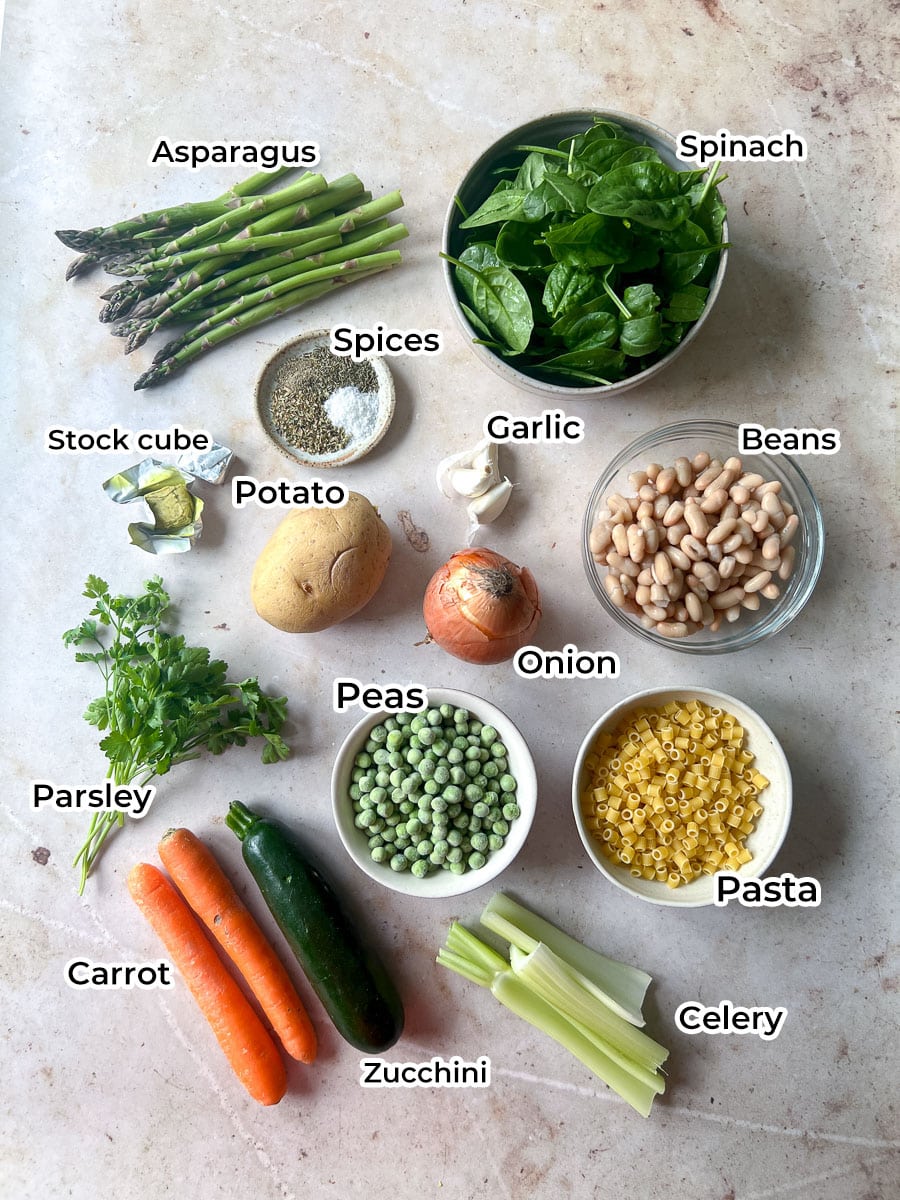
Spring Vegetable Minestrone Soup Ingredients
This nourishing spring vegetable minestrone is built around simple pantry staples and fresh seasonal produce. Think tender vegetables, creamy white beans, small pasta, and plenty of herbs in a light but flavorful broth. These ingredients are flexible too, so you can easily adjust based on what you have on hand!
- Olive oil: Use a good-quality olive oil for sautéing the vegetables and building the flavor base of the soup.
- Onion: Yellow or white onion both work well here, adding sweetness and depth to the broth.
- Garlic: Fresh garlic gives the soup a richer, more aromatic flavor than garlic powder.
- Carrots: add natural sweetness and balance the acidity of the tomatoes and lemon.
- Celery stalk: brings classic minestrone flavor and adds savory depth to the base.
- Spices: oregano, thyme, salt, and black pepper for the ultimate Italian spice combo.
- Potato: A waxy or all-purpose potato works best. It adds heartiness and helps make the soup more satisfying.
- Zucchini: Soft, tender zucchini keeps the soup light and seasonal.
- White beans (such as cannellini beans): Creamy white beans add protein, texture, and make the soup more filling. Use canned or cooked from dry, as you like. We like to add 1 can to be blended into the soup, and one extra can of beans that we add with the asparagus and keep whole (not blended) for more protein and texture!
- Vegetable broth: Use good-quality vegetable broth for the best flavor, or dissolve 2 vegetable stock cubes in 5 cups of hot water.
- Small pasta (such as ditalini, small shells, or elbow pasta): Small pasta works best for minestrone and helps create that classic cozy texture.
- Fresh asparagus: adds a bright spring flavor and slight crunch.
- Peas: use fresh or frozen peas; both work well!
- Fresh spinach: stirred in at the end for softness, color, and extra greens. We also like to add a handful while blending part of the soup base, to give it a more vibrant color!
- Lemon juice: Fresh lemon juice brightens the broth and gives the soup its fresh spring finish.
- Fresh parsley: A final sprinkle of fresh herbs adds color and a burst of freshness just before serving.
This minestrone works well even if you don’t have fresh ingredients, like asparagus and spinach!
How to make this Spring Vegetable Minestrone Soup
One-pot meals are our favorite kind of meals, and this minestrone couldn’t be simpler to make! The key to great flavor is building layers of flavor slowly… starting with the aromatics, simmering the vegetables gently, and finishing with lemon juice and fresh herbs for brightness.
I also like to blend a part of the soup until smooth to create a naturally creamy texture without adding cream, making the broth feel rich while keeping the recipe light and fresh! It’s a great little trick that will bring this minestrone from “…okay” to “wow”!
Here’s the step-by-step on how to make this minestrone:
Build the flavor base
Heat the olive oil in a large soup pot or Dutch oven over medium heat.
Add the diced onion, carrots, and celery, and cook for about 5–7 minutes, stirring occasionally, until the vegetables begin to soften and the onion becomes translucent.
This step creates the classic flavor base for minestrone, so don’t rush it. Letting the vegetables soften properly helps develop a deeper, sweeter flavor in the final broth.
If the vegetables begin to stick, add a small splash of broth or water rather than extra oil.
Add the garlic and herbs
Once the base is softened, stir in the minced garlic, dried oregano, and dried thyme.
Cook for about 1 minute, stirring constantly, until fragrant.
This short step helps release the oils from the herbs and garlic, giving the soup a much richer flavor.
Be careful not to let the garlic brown, as it can become bitter quickly.
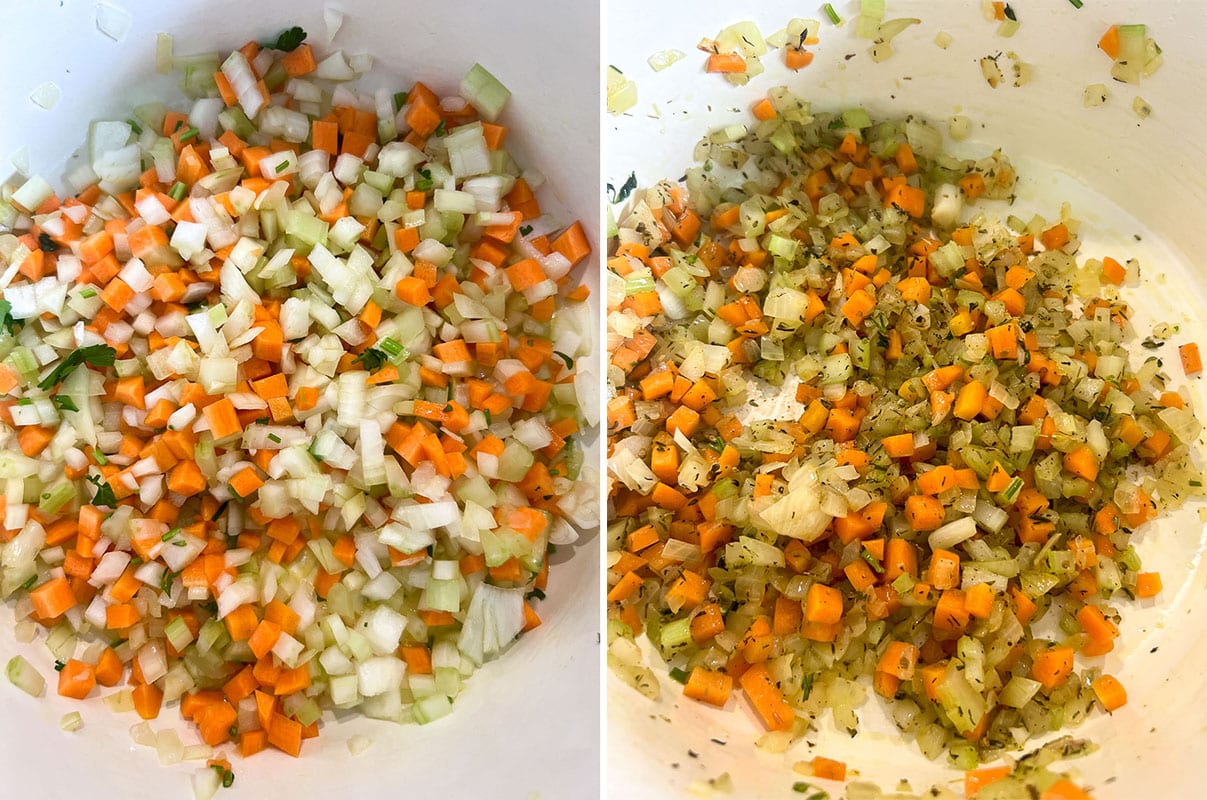
Cook the tomato paste
Add the tomato paste (if using) and stir well so it coats the vegetables evenly.
Cook for another 1–2 minutes until the tomato paste darkens slightly and becomes fragrant.
Cooking the tomato paste first removes any raw, acidic taste and adds a deeper savory richness to the broth.
Even though it’s optional, tomato paste gives the soup a more classic minestrone flavor and extra depth.
Simmer
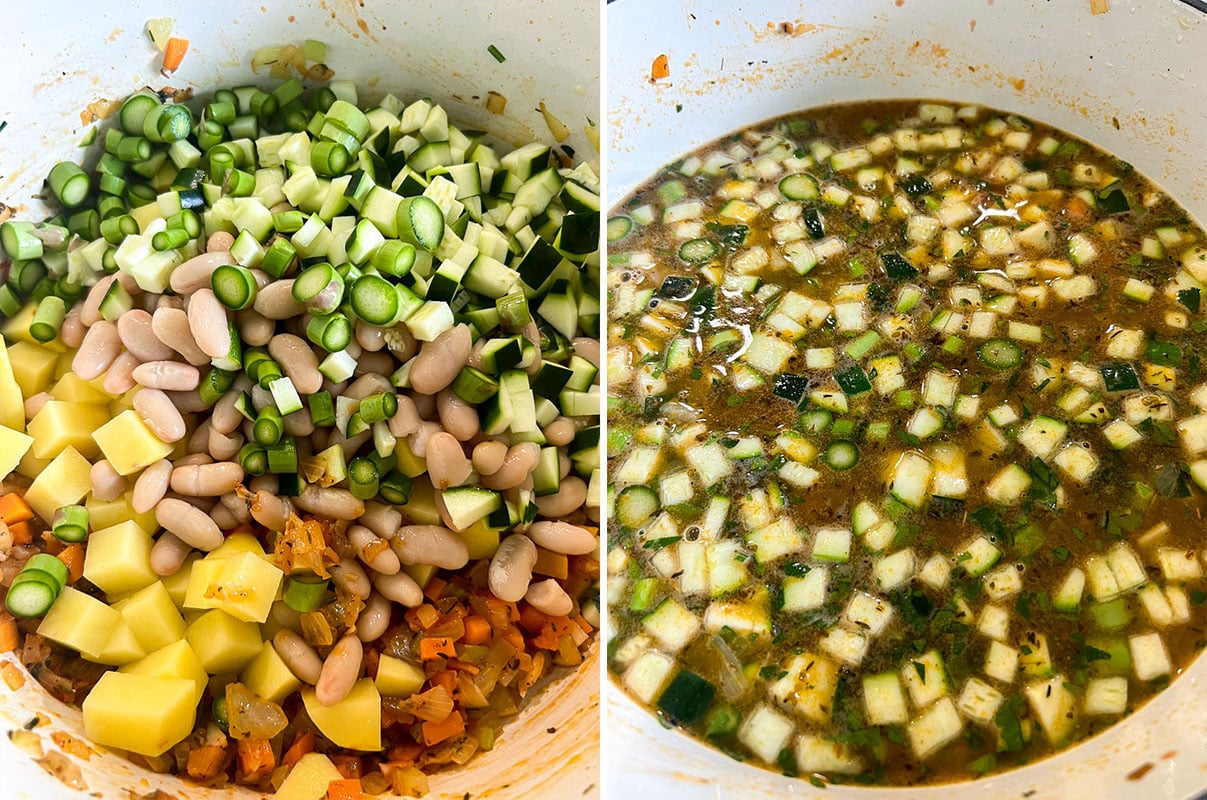
Add the diced potato, zucchini, white beans, asparagus stems, zucchini, and vegetable broth. Bring everything to a gentle boil, then reduce the heat to a simmer.
Cook uncovered for about 10 minutes, until the potatoes begin to soften.
Season with salt and black pepper to taste.
Taste the broth here and adjust the seasoning before adding pasta, since pasta absorbs flavor as it cooks.
Blend for a creamier broth
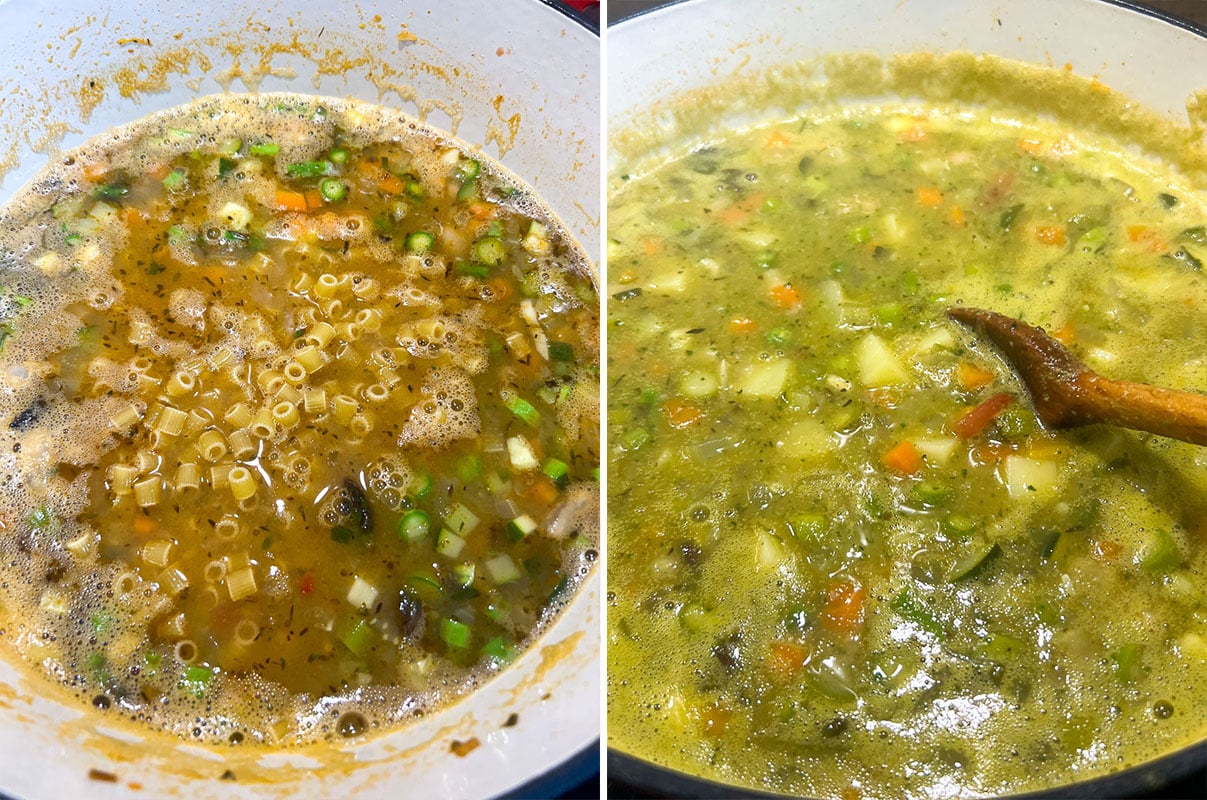
Before adding the pasta, carefully remove about one-third of the soup and transfer it to a blender.
Add one small handful of spinach and blend until smooth and creamy.
Pour the blended mixture back into the pot and stir well.
This simple trick creates a naturally creamy, slightly thicker broth without needing any cream or dairy, while keeping the soup feeling light and vegetable-forward.
Be careful when blending hot soup. Let it cool slightly first or vent the blender lid carefully to avoid pressure buildup. I like to just blend it with an immersion blender; it works wonderfully!
Add pasta and spring vegetables
Stir in the small pasta, asparagus tops, and peas.
Simmer for another 8–10 minutes, or until the pasta is tender and the asparagus is bright green and just cooked.
Avoid overcooking at this stage. The vegetables should stay vibrant and fresh, especially the asparagus and peas.
If using frozen peas, add them during the last 5 minutes so they stay sweet and bright.
If the soup thickens too much, simply add an extra splash of broth or hot water.
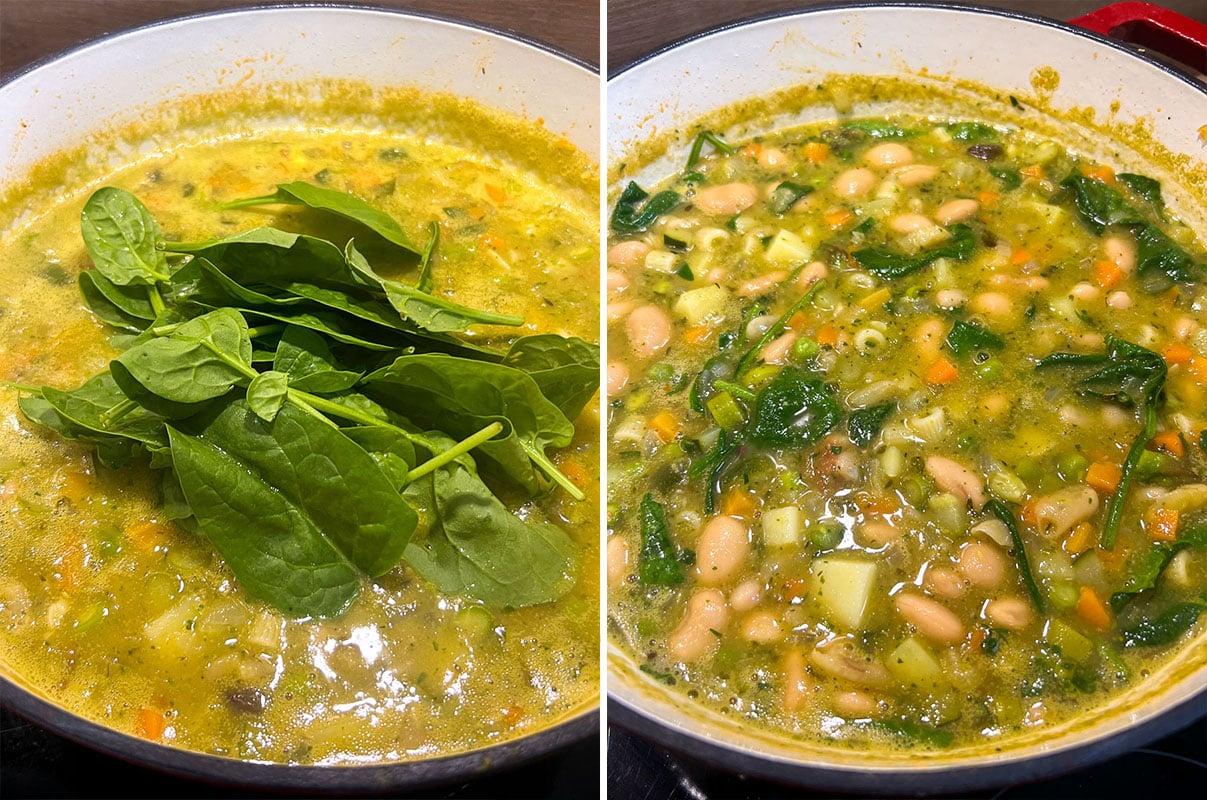
Finish with greens
Stir in the remaining fresh spinach and cook for 1–2 minutes, just until wilted.
Add the lemon juice and give everything a final taste.
Adjust with more salt, black pepper, or lemon juice as needed.
The lemon is what gives this soup its fresh spring flavor and helps brighten all the vegetables, so don’t skip it.
Serve
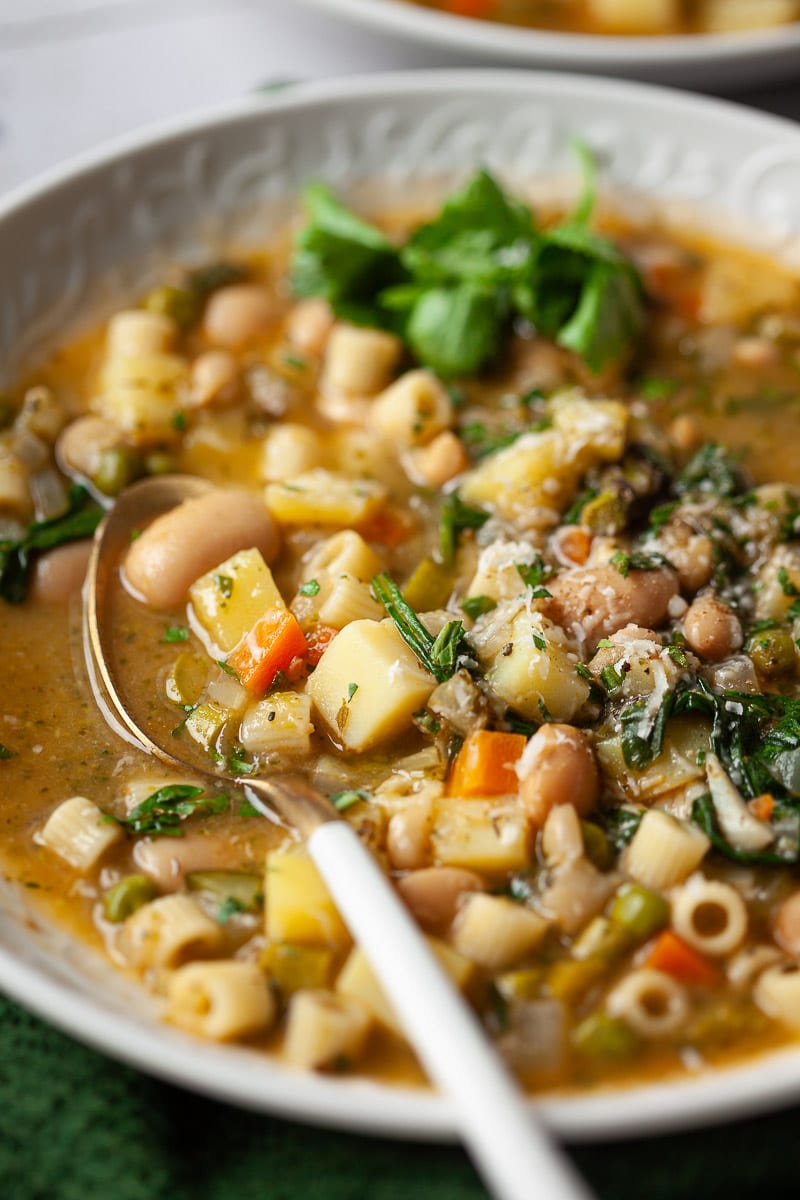
Ladle the hot soup into bowls and finish with fresh basil or parsley and a small drizzle of good olive oil.
Serve with crusty bread, sourdough toast, or a simple green salad for a full meal.
This soup tastes even better the next day as the flavors continue to develop, making it perfect for meal prep and leftovers.
Serving ideas
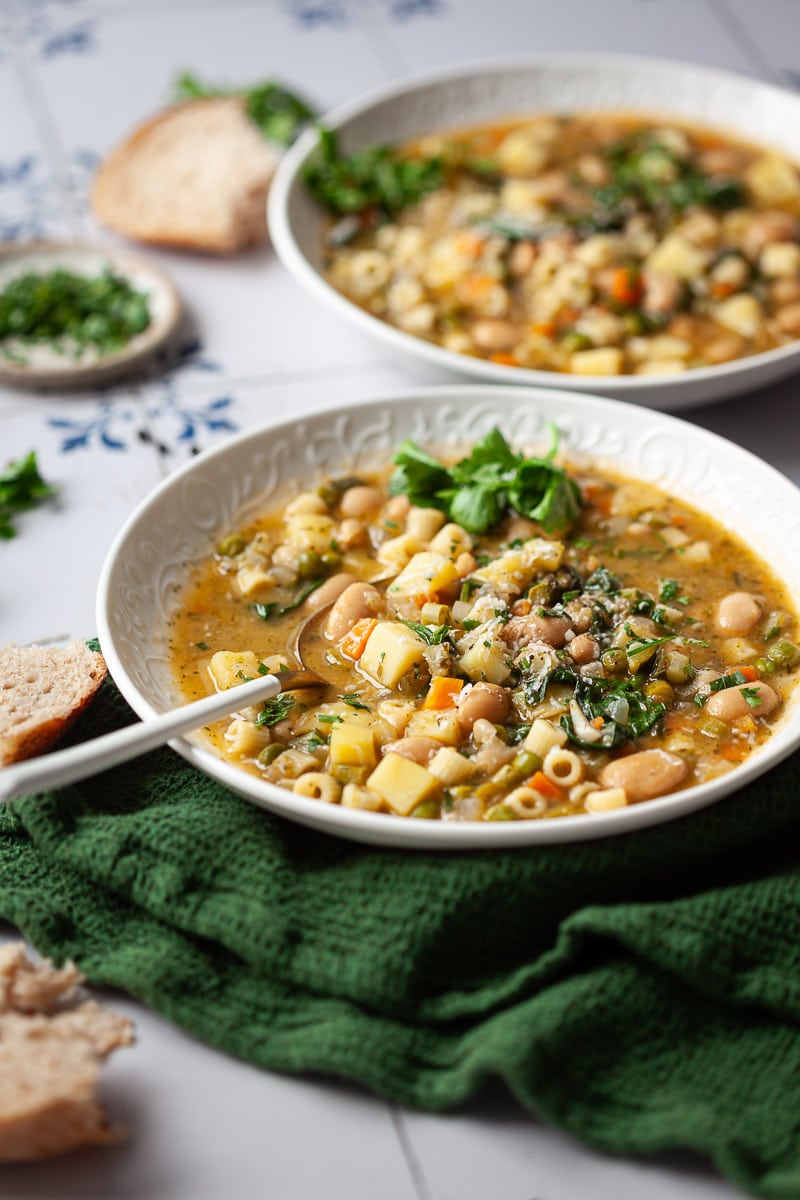
This vegan spring vegetable minestrone is versatile, light yet satisfying, and easy to adapt depending on the occasion. Here are a few ways to serve and elevate it:
- Serve hot with a drizzle of good olive oil, freshly cracked black pepper, and a generous sprinkle of fresh basil or parsley. Pair with crusty bread or sourdough to soak up the broth.
- Top each bowl with homemade croutons, toasted seeds, or crispy chickpeas for added texture and contrast.
- Serve alongside a sandwich (like grilled vegetables or hummus) or add an extra scoop of beans or cooked lentils to the soup for more protein.
- A spoonful of vegan pesto, cashew cream, or a swirl of plant-based yogurt adds richness and a nice contrast to the bright broth.
- Sprinkle with chili flakes or a drizzle of chili oil if you like a bit of spice.
Storage tips
This soup stores very well and is great for meal prep, but a few small tips will help keep the texture at its best.
Refrigerator:
Let the soup cool completely, then store it in an airtight container in the fridge for up to 4 days.
The pasta will continue to absorb liquid as it sits. When reheating, add a splash of water or broth to loosen the soup and bring it back to your desired consistency.
Freezer:
You can freeze the soup for up to 2–3 months. For best results, freeze it without the pasta, as pasta can become soft and mushy after thawing. If possible, cook and add fresh pasta when reheating. If the soup is already mixed with pasta, it’s still safe to freeze; the texture will just be softer.
Reheating:
Reheat gently on the stovetop over medium-low heat, stirring occasionally. Add extra broth or water as needed to adjust consistency.
Taste and refresh the flavors with a squeeze of lemon juice and a pinch of salt or fresh herbs before serving.
If you’re planning this for meal prep, consider cooking the pasta separately and adding it to individual portions when serving. This keeps the soup fresher and prevents it from thickening too much over time.
You may also like:
Spring Vegetable Minestrone Soup
Fresh asparagus, sweet peas, white beans, and herbs make this vegan spring minestrone soup light, flavorful, and satisfying. A simple seasonal soup everyone will love.
Ingredients
- 2 tbsp olive oil
- 1 small onion, diced
- 2 cloves garlic, minced
- 1-2 carrots, diced
- 1 celery stalks, diced
- 1 tsp dried oregano
- 1 tsp dried thyme
- Salt & black pepper
- 2 tbsp tomato paste (optional)
- 1 potato
- 1 zucchini, diced
- 1 can (400g) white beans (like cannellini), drained & rinsed
- 5 cups vegetable broth (or 2 veggie stock cubes and 5 cups of water)
- 1 cup small pasta (like ditalini or small shells)
- 1 cup asparagus, cut into 2–3 cm pieces
- 1 cup fresh or frozen peas
- 2 handfuls fresh spinach
- 1–2 tbsp lemon juice
- Fresh basil or parsley (for serving)
Instructions
- Heat olive oil in a large pot over medium heat. Add onion, carrots, and celery. Cook for 5–7 minutes until softened.
- Stir in garlic, oregano, and thyme. Cook for about 1 minute until fragrant.
- Add tomato paste, stir to combine, and cook for another minute until fragrant.
- Add potatoes and vegetable broth, zucchini, asparagus stems, and beans. Bring to a boil, then reduce the heat and simmer for 10 minutes. Season to taste with salt and pepper.
- Before you add in the pasta, remove about 1/3 of the soup, add a handful of spinach, and blend it until smooth. Return to the pot.
- Stir in the pasta, asparagus tops, and peas. Simmer for another 8–10 minutes, until the pasta is tender and the vegetables are just cooked.
- Stir in spinach and cook until wilted (1–2 minutes). Add lemon juice, salt, and pepper.
- Ladle into bowls and top with fresh herbs and a drizzle of olive oil.
Nutrition Information:
Yield: 6 Serving Size: 1Amount Per Serving: Calories: 255Total Fat: 6gSaturated Fat: 1gUnsaturated Fat: 5gSodium: 695mgCarbohydrates: 42gFiber: 8gSugar: 7gProtein: 11g
Nutrition data is automatically calculated using Nutritionix and may not be accurate.