


Make this Creamy Roasted Squash Risotto for a cozy, comforting dinner! Rich and velvety, this is the ultimate fall comfort meal.
When squash season rolls around, I’m always looking for new ways to turn those beautiful winter squash into something cozy and delicious.
And this Creamy Roasted Squash Risotto might just be one of my favorite ways to do it! Sweet, caramelized roasted squash, fragrant crispy sage, creamy rice, and a generous sprinkle of Parmesan turn into a bowl of pure comfort food.
What I love about this recipe is that it feels a little special without requiring anything fancy.
Most of the ingredients are pantry staples, and the fresh squash is really the star of the show. Roasting it brings out its natural sweetness and gives the risotto a beautiful golden color and velvety texture. Add some crispy sage and toasted pine nuts on top, and you’ve got a pretty irresistible combination!
And while this is a lovely recipe to make right in the middle of squash season, it’s just as perfect in the dead of winter.
Winter squash, such as butternut and kabocha, keep surprisingly well when stored in a cool, dry place, so you can often enjoy them long after the autumn harvest. Paired with pantry-friendly ingredients like rice, olive oil, and vegetable broth, this is the kind of comforting meal you can pull together even when the fridge is looking a little bare.
There’s also plenty to love about squash beyond its delicious flavor. It’s naturally rich in beta-carotene, which your body converts into vitamin A to support healthy vision and immune function. Plus, it provides fiber and other beneficial nutrients, making it a lovely addition to everyday meals.
So, whether you’ve just brought home a fresh squash from the farmers’ market or found one tucked away in your pantry in the middle of February, this Creamy Roasted Squash Risotto is a delicious excuse to put it to good use.
Grab a spoon, grate a little extra Parmesan, and let’s make something cozy!
Creamy Roasted Squash Risotto Ingredients
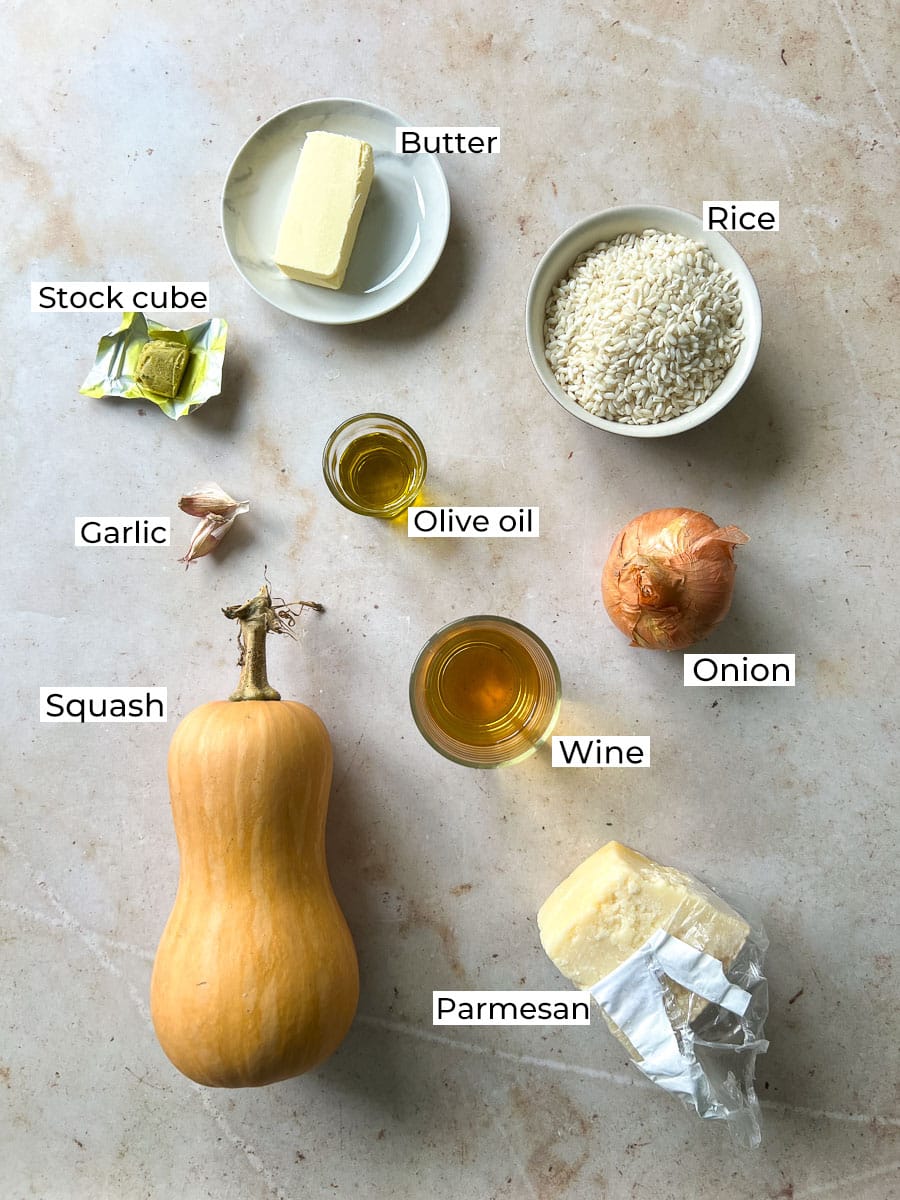
This Creamy Roasted Squash Risotto is made with simple, wholesome ingredients – sweet, caramelized squash, fragrant fresh sage, creamy rice, and a generous finish of Parmesan.
The ingredients are easy to find, and with a few simple swaps, you can easily make this recipe completely vegan!
Here’s what you will need:
- Butternut or kabocha squash: You’ll need one medium squash, peeled, seeded, and cut in half. Butternut squash has a naturally sweet, buttery flavor, while kabocha is slightly nuttier and has a wonderfully dense, creamy texture. Both work beautifully in this risotto. Roasting brings out their natural sweetness and gives the finished dish a deeper, more concentrated flavor.
- Olive oil: A few tablespoons of good-quality extra virgin olive oil help the squash caramelize in the oven and add a lovely fruity flavor. You’ll also use some to sauté the onion and garlic before adding the rice.
- Salt and black pepper: Season the squash generously before roasting to bring out its sweetness. You’ll also want to season the risotto as it cooks, adjusting to taste depending on how salty your broth and cheese are.
- Fresh sage: Sage and winter squash are a match made in heaven! Its earthy, slightly peppery aroma balances the natural sweetness of the roasted squash. Fresh sage leaves are especially delicious when lightly fried until crisp and used as a garnish.
- Onion: One small finely chopped yellow onion creates a flavorful base for the risotto. Slowly sautéing it until soft and translucent adds natural sweetness without overpowering the delicate squash and sage flavors.
- Garlic: A couple of minced garlic cloves add a lovely savory depth. Cook them briefly with the onion until fragrant, being careful not to let them brown or burn.
- Rice: Arborio is the classic choice for risotto. Its high starch content creates that signature creamy consistency while the grains remain slightly firm in the center. Avoid rinsing the rice before cooking, as you’ll want to keep all that lovely starch!
- Dry white wine (optional): A splash of dry white wine adds acidity and brightness, balancing the richness of the squash and Parmesan. Pinot Grigio or Sauvignon Blanc are both good choices. If you prefer not to cook with wine, simply skip it and use a little extra broth instead.
- Vegetable broth: Warm broth is essential for making a good risotto. Adding it gradually allows the rice to absorb the liquid while releasing its starch, creating a beautifully creamy texture. Use vegetable broth to keep the recipe vegetarian or vegan. Choose a good-quality, low-sodium broth so you can control the seasoning.
- Parmesan cheese: Freshly grated Parmesan adds a salty, savory, umami-rich finish that makes risotto extra delicious. Grate it yourself for the best melting texture. For a vegan version, use your favorite dairy-free Parmesan alternative or nutritional yeast for a cheesy, savory flavor.
- Unsalted butter: Stirring butter into the risotto at the very end is a classic Italian technique. It gives the dish a glossy, velvety finish and makes it wonderfully rich. For a vegan version, use a good-quality plant-based butter or a drizzle of extra virgin olive oil instead.
- Toasted pine nuts: These little golden nuts add a delicate buttery flavor and a wonderful crunch that contrasts with the creamy risotto. Toast them in a dry skillet over medium-low heat for a few minutes until lightly golden and fragrant. Keep an eye on them, as they can burn quickly. Chopped toasted hazelnuts or walnuts are great alternatives, too.
Easy swaps to make this risotto vegan
You don’t need to compromise on flavor or creaminess to make this recipe entirely plant-based! Use vegetable broth as your base, swap the Parmesan cheese with a vegan Parmesan or nutritional yeast, and use vegan butter or olive oil in place of unsalted butter.
For the creamiest vegan version, use a combination of good-quality olive oil, vegan Parmesan, and a little nutritional yeast. The roasted squash already adds plenty of natural sweetness and creaminess, so you won’t miss the dairy!
How to make Creamy Roasted Squash Risotto
Making risotto from scratch is easier than you might think, and this roasted squash version is well worth the little extra stirring!
The secret to a really good risotto is taking your time, adding warm broth gradually and letting the rice release its natural starch. Roasting the squash separately brings out its natural sweetness, while crispy sage, Parmesan and toasted pine nuts add layers of flavor and texture.
The result is a beautifully creamy, cozy risotto that’s perfect for a chilly autumn evening!
Roast the squash
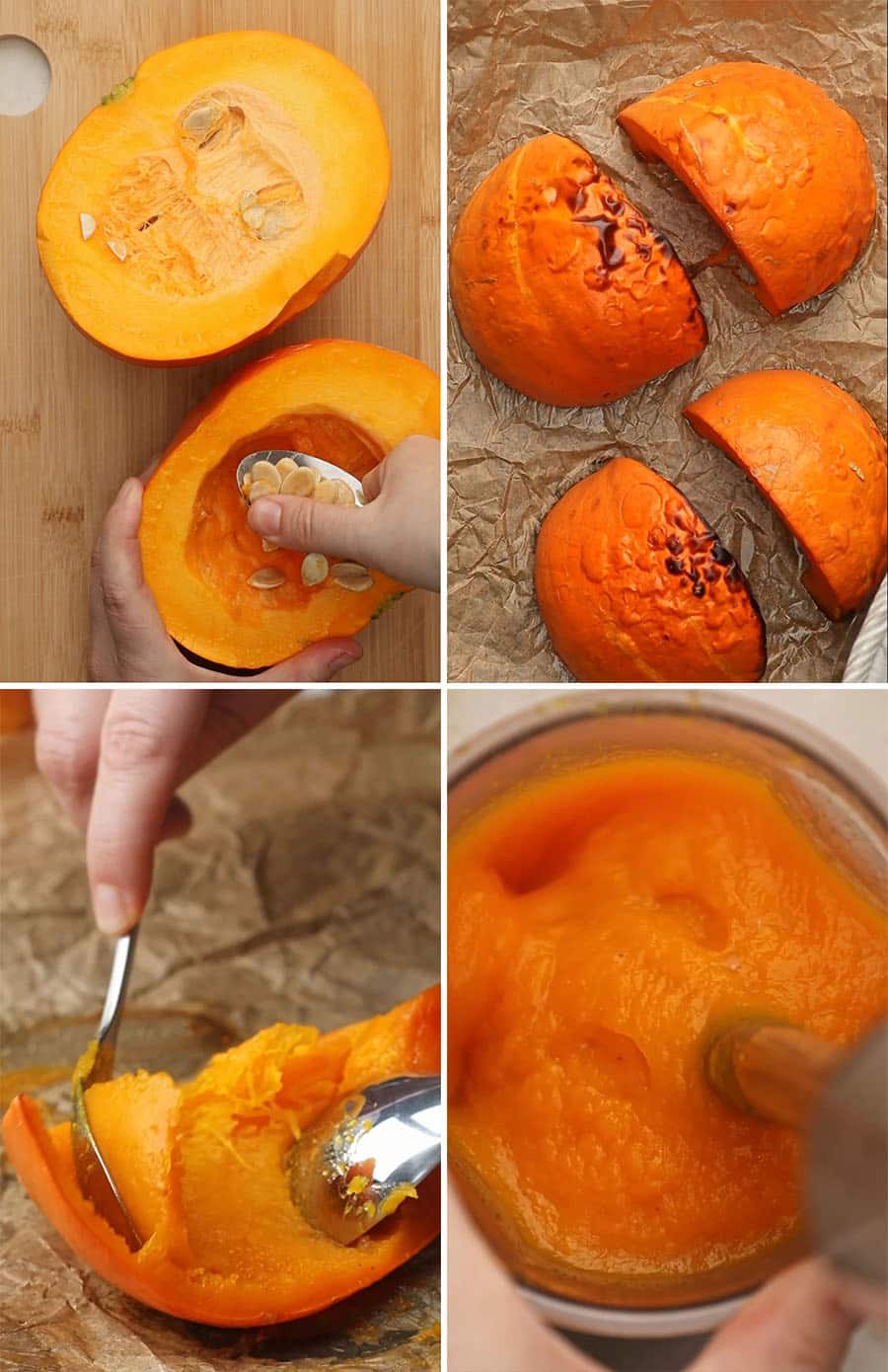
Preheat your oven to 200°C (400°F). Peel the squash, cut it in half lengthwise, and scoop out the seeds. Cut into smaller, evenly sized chunks or wedges for quicker, more even roasting. Arrange them on a baking tray, drizzle with 1–2 tablespoons of olive oil, and season generously with salt and black pepper.
Roast for 25–35 minutes, turning once halfway through, until the squash is fork-tender and lightly caramelized around the edges. Cooking time will depend on the size of your pieces and the type of squash you’re using.
Allow it to cool slightly, then blend or mash until smooth. Set aside.
Prepare the crispy sage
Heat 2 tablespoons of olive oil in a large, deep skillet or wide saucepan over medium heat. Once the oil is warm, add the fresh sage leaves in a single layer. Fry for approximately 30–60 seconds, turning once if needed, until crisp and fragrant.
Remove the leaves with a slotted spoon and place them on a paper towel-lined plate. They’ll crisp up even more as they cool.
Keep the fragrant sage-infused oil in the skillet – this will become the flavorful base for your risotto.
Sage leaves cook very quickly, so keep an eye on them. You want them crisp and bright green, not dark brown. Work in batches if necessary.
Sauté the onion and garlic
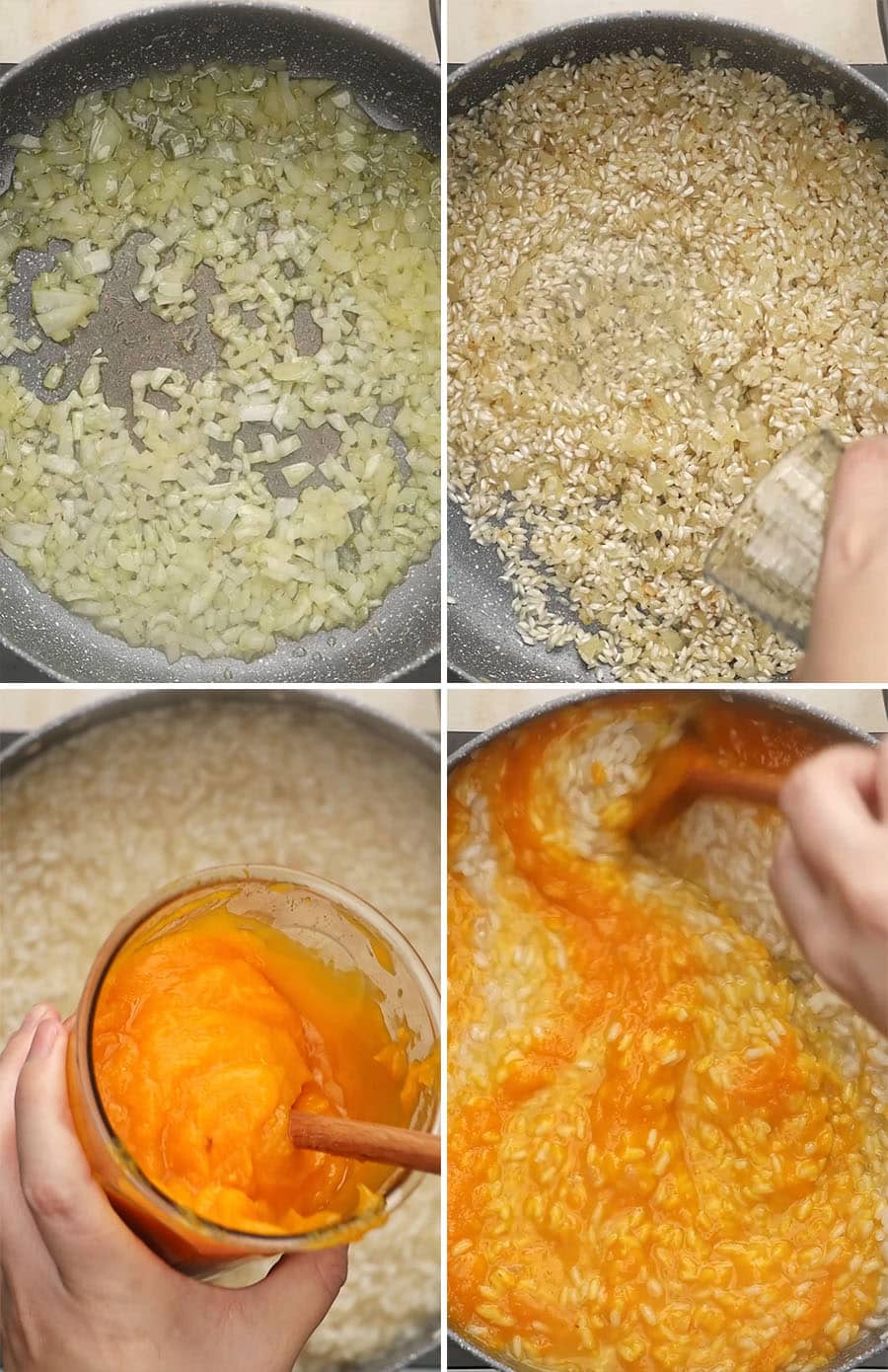
In the same skillet with the sage-infused oil, add the finely chopped onion. Cook over medium heat for about 4–5 minutes, stirring occasionally, until soft and translucent. You want the onion to become tender without browning.
Add the minced garlic and cook for another 30–60 seconds, stirring constantly until fragrant.
Keep the heat moderate. Browning the garlic can make it bitter and overpower the delicate sweetness of the squash.
Toast the rice
Add the rice directly to the skillet and stir well to coat every grain in the fragrant oil. Cook for approximately 2 minutes, stirring frequently.
The edges of the rice grains should become slightly translucent while the centers remain opaque. This quick toasting step helps the grains maintain their structure as they cook.
Don’t rinse the rice before cooking! The starch on the surface is what gives risotto its signature creamy consistency.
Deglaze with white wine
Pour in the white wine, if using, and stir continuously until it has mostly evaporated and been absorbed by the rice. This usually takes 1–2 minutes.
The wine adds a lovely touch of acidity that balances the sweetness of the squash and richness of the finished risotto.
Use a dry white wine rather than a sweet one. If you prefer to skip the wine, simply move straight to adding the warm broth.
Gradually add the warm broth
Reduce the heat to medium-low. Begin adding the warm broth, one ladleful at a time, stirring frequently. Allow most of the liquid to be absorbed before adding the next ladleful.
Continue this process for approximately 18–20 minutes, adding more broth as needed, until the rice is tender but still has a slight bite in the center (al dente).
Keep the broth warm in a separate saucepan throughout cooking so you don’t interrupt the simmering process every time you add more.
You don’t need to stir every single second, but frequent stirring helps release the rice’s starch and prevents it from sticking. Add broth gradually rather than flooding the pan. You may not need all 4–5 cups, so let the rice guide you!
Stir in the roasted squash
Once the rice is almost cooked, add the roasted squash purée, starting with about 1 cup. Gently fold it into the risotto until evenly combined and beautifully golden. Add more purée if you’d like a deeper squash flavor and an even creamier consistency; up to 1–2 cups, depending on your preference.
Remove the skillet from the heat. Stir in the grated Parmesan and butter until melted and incorporated. This final step gives risotto its signature glossy, velvety finish.
Taste and adjust with salt and freshly ground black pepper. If the risotto feels too thick, add another splash of warm broth to loosen it.
The finished risotto should be creamy and gently spread across the plate, not stiff or stodgy. Keep it slightly looser than you think you need, as it will continue thickening as it rests.

Garnish and serve
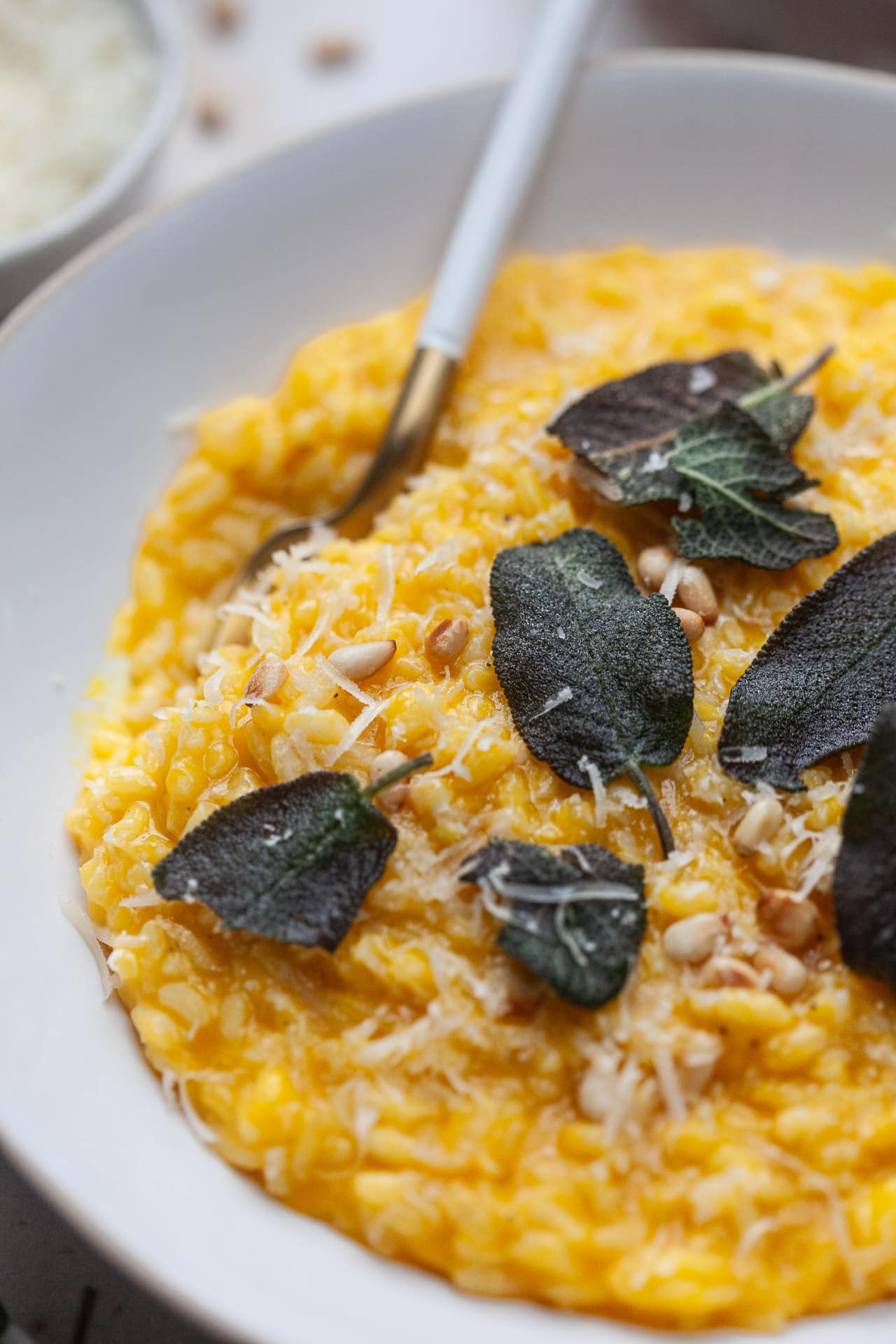
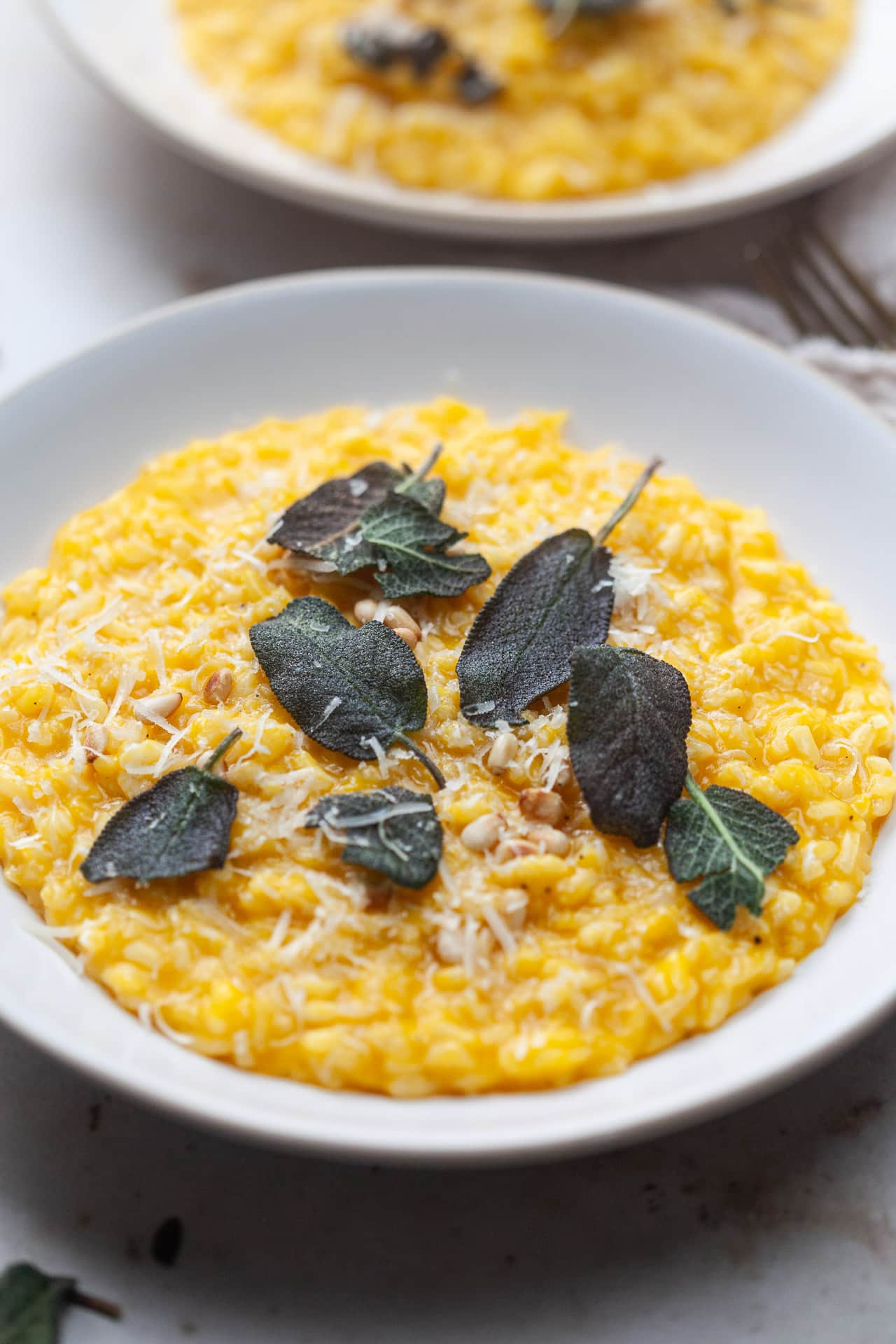
Spoon the risotto into warm serving bowls or shallow plates. Finish with crispy sage leaves, toasted pine nuts, a generous sprinkle of freshly grated Parmesan and a little freshly cracked black pepper.
For an extra touch of richness, drizzle with a little good-quality olive oil just before serving.
Serve immediately while the risotto is warm, creamy, and at its very best!
Serving ideas
Serve immediately as the risotto is done cooking, as risotto waits for nobody!
It continues absorbing liquid as it sits, so have your toppings and serving bowls ready before the rice is finished.
This risotto is delicious on its own, but a few simple additions can make it feel even more special. Here are some lovely ways to enjoy it:
- Serve alongside a simple arugula or mixed green salad with lemon vinaigrette. The fresh, slightly peppery greens balance the richness of the risotto beautifully.
- Add roasted Brussels sprouts, broccolini, or crispy kale for extra color, texture, and seasonal goodness.
- A handful of toasted pine nuts, chopped walnuts, or hazelnuts adds a delicious crunch and nutty flavor.
- Don’t skip the fried sage leaves! Their earthy aroma and delicate crunch complement the sweet roasted squash perfectly.
- Finish with freshly grated Parmesan or vegan Parmesan, a drizzle of good-quality olive oil, and freshly cracked black pepper.
- Pair it with roasted cauliflower, garlic green beans, or a platter of seasonal roasted vegetables for a more substantial meal.
Storage tips
Risotto is always best enjoyed freshly made, when it’s wonderfully creamy, and the rice still has a little bite.
However, if you have leftovers, don’t throw them away! With a little extra liquid and gentle reheating, you can bring back much of that lovely creamy texture.
Refrigeration:
Allow the risotto to cool slightly, then transfer it to an airtight container and refrigerate for up to 3 days. Don’t leave cooked rice at room temperature for more than 2 hours.
Reheating:
Add the leftover risotto to a saucepan with a splash of vegetable broth or water. Warm gently over medium-low heat, stirring frequently, until heated all the way through. Add more liquid as needed to loosen the consistency.
Microwave:
Place a portion in a microwave-safe bowl, add a tablespoon or two of broth or water, cover loosely, and heat until steaming hot throughout, stirring halfway through.
Freezing:
You can freeze risotto for up to 2 months, although the rice may become softer and lose some of its original texture. Thaw overnight in the refrigerator and reheat gently with extra broth.
Make-ahead tip:
You can roast and purée the squash a day or two in advance and store it in the fridge. This makes preparing the risotto much quicker when you’re ready to cook.
A little leftover inspiration:
Turn leftover risotto into crispy Italian-inspired arancini! Let the risotto chill until firm, shape it into small balls, coat in breadcrumbs, and bake or air-fry until golden and crispy. Use vegan cheese and breadcrumbs for a completely plant-based version.
Similar recipes:
Pearl Barley and Pumpkin Risotto
This recipe is sponsored by Hofer Austria. | Naročnik oglasa: Hofer KG
Creamy Roasted Squash Risotto
Make this Creamy Roasted Squash Risotto for a cozy, comforting dinner! Rich and velvety, this is the utimate fall comfort meal.
Ingredients
- 1 medium butternut or kabocha squash
- 3 tbsp olive oil
- Salt and pepper, to taste
- 6–8 fresh sage leaves
- 1 small onion, finely chopped
- 2 cloves garlic, minced
- 300 grams rice (arborio, carnaroli, risotto rice)
- 1/2 cup dry white wine (optional)
- 4–5 cups vegetable broth
- 1/4 cup grated Parmesan cheese
- 2 tbsp unsalted butter
- Toasted pine nuts
Instructions
- Roast the squash: Preheat your oven to 200°C (400°F). Cut the squash in half, remove the seeds, place cut side down on a baking tray, and roast for 20–25 minutes or until golden and tender. Remove from the oven, discard the skin, and purée in a blender or mash until smooth. Set aside.
- Prepare crispy sage: In a large skillet, heat 2 tablespoons of olive oil over medium heat. Add the fresh sage leaves and fry until crispy, about 1 minute. Remove the sage leaves and drain on paper towels. Keep the sage-infused oil in the skillet for the risotto.
- Cook the risotto: In the same skillet with the sage-infused oil, add the chopped onion and cook over medium heat until softened (about 5 minutes). Add the garlic and cook for another minute until fragrant.
- Stir in the rice, coating it in the oil, and cook for 2 minutes to toast slightly.
- Pour in the white wine (if using) and stir until mostly absorbed.
- Begin adding the warm broth, one ladle at a time, stirring constantly and allowing each addition to absorb before adding the next. Continue this process for about 20 minutes, until the rice is creamy and tender but with a slight bite.
- Once the rice is nearly done, fold in the squash purée until the risotto is a creamy, even consistency. You may use up to 1-2 cups of squash purée. Add the grated Parmesan and butter, stirring until smooth. Season with salt and pepper to taste.
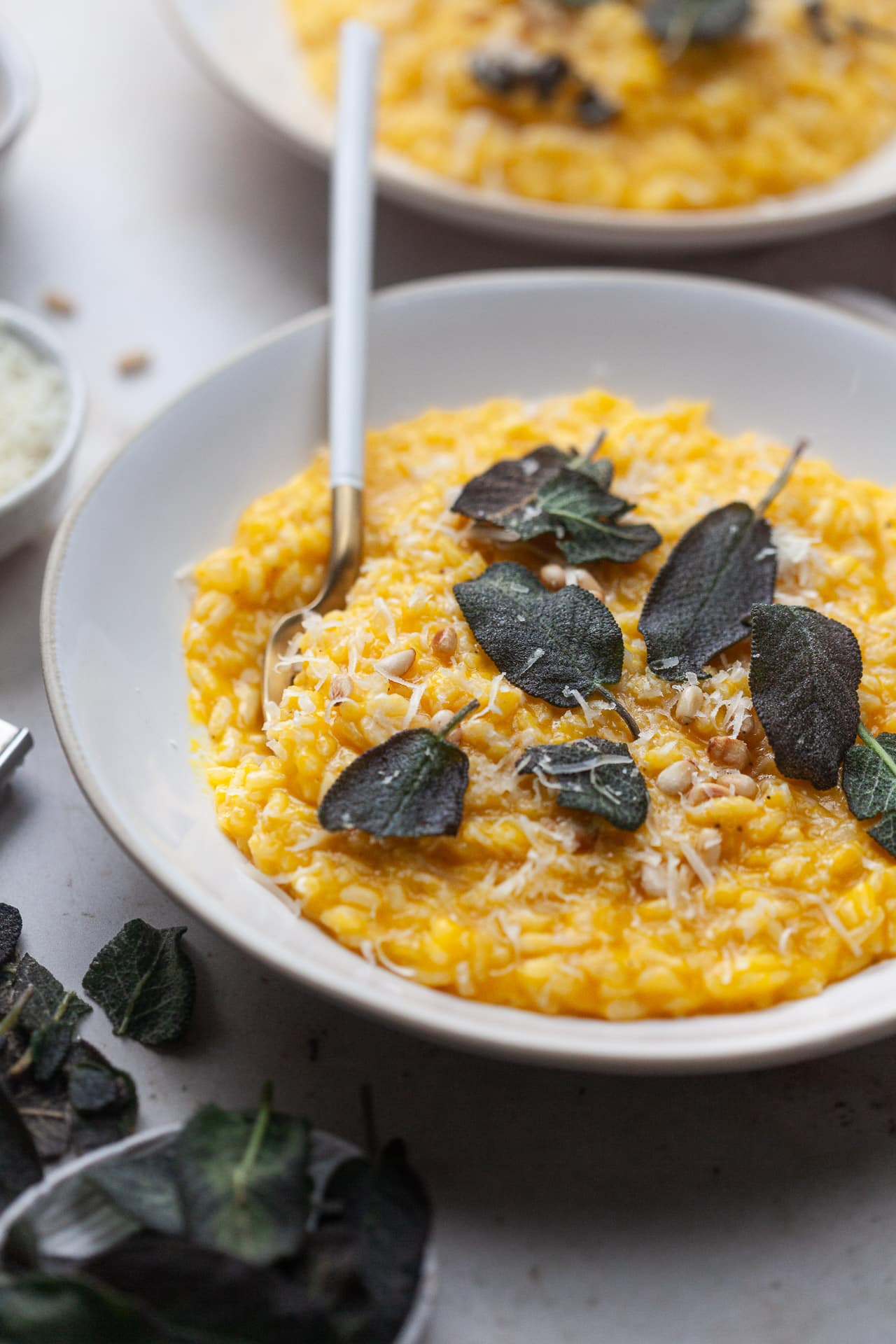
- Serve the risotto warm, garnished with crispy sage leaves, fresh sage if desired, toasted pine nuts, and an extra sprinkle of Parmesan.
Nutrition Information:
Yield: 4 Serving Size: 1Amount Per Serving: Calories: 326Total Fat: 21gSaturated Fat: 8gUnsaturated Fat: 13gCholesterol: 28mgSodium: 140mgCarbohydrates: 26gFiber: 1gSugar: 1gProtein: 4g
Nutrition data is automatically calculated using Nutritionix and may not be accurate.